The Universal Language of Sacred Sound
Across continents and throughout millennia, human beings have discovered something profound: the power of repetitive sacred sound to transform consciousness, heal the body, and connect us to something greater than ourselves. Whether called mantra, dhikr, psalm, or prayer, chanting represents one of humanity’s oldest and most universal spiritual practices.
What makes chanting so remarkable is not just its antiquity, but its persistence. In an age of technological sophistication, millions of people worldwide still turn to these ancient vibrations, finding in them something that no app or algorithm can replicate—a direct pathway to inner peace, clarity, and transformation.
My Personal Experience :
When Chanting Meets Life’s Raw Moments
There’s something powerful about continuing a practice in the midst of chaos—whether that chaos is external (police tackling thieves beside you) or internal (grief finally breaking through after being held back). These are the moments when chanting reveals its true power: not as an escape from life, but as a way to stay present with life in all its messy, painful, beautiful intensity.
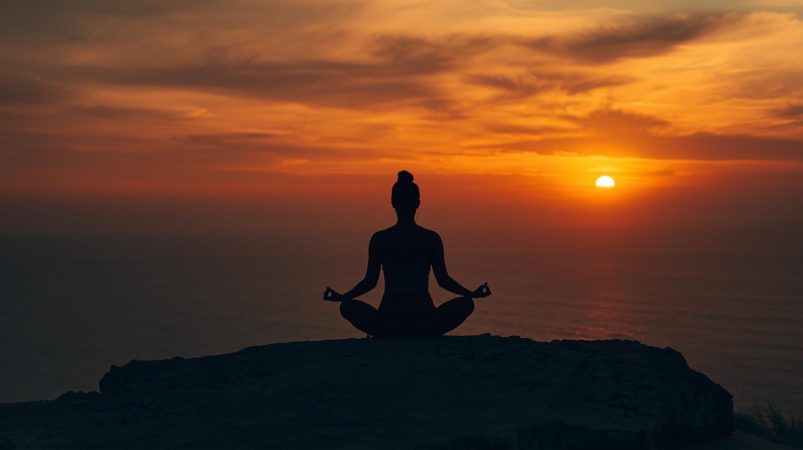
Picture this: sitting on a rock in Jaco, Costa Rica, weeping through the Gayatri mantra as grief for a lost mother finally breaks through. And in that same moment, police tackle a thief to the ground mere feet away. The chaos erupts, but the chant continues. The thief and policemen stare wide-eyed at someone who won’t move, won’t stop, won’t interrupt the sacred process of grief moving through.
Chanting doesn’t remove us from our emotions or our circumstances. Instead, it creates a container strong enough to hold them, a thread of continuity that persists even when everything else is falling apart. That rock becomes not just a place to sit, but an anchor point—a choice to stay present with grief, to let it move through, to trust the process even as the world erupts in chaos all around.
This is perhaps the deepest benefit of a chanting practice: it teaches us that we can be with what is, fully and completely, without being destroyed by it. The mantra becomes a lifeline, and in following that lifeline through the darkness, we discover that we’re stronger and more resilient than we knew.
The Gentle Power of Daily Practice
The shifts that come from regular chanting are rarely the lightning-bolt transformations we might expect from Hollywood movies. They’re more like watching a Polaroid develop—subtle at first, easy to miss, but gradually revealing a picture that was there all along, just waiting to emerge.
You might notice that the same situation that would have sent you into anxiety a month ago now feels manageable. That decision you’ve been agonizing over suddenly becomes clear. The relationship pattern that’s plagued you for years begins to shift. You find yourself responding rather than reacting. Life flows a bit more easily, not because your circumstances have changed, but because you have.
People who commit to daily practice often report increased clarity in decision-making, a greater sense of equanimity in the face of life’s challenges, improved intuition, and what can only be described as a feeling of being supported by something larger than oneself. Synchronicities increase. The right people and opportunities appear. Inner peace becomes not just a momentary experience during chanting, but a baseline state that persists throughout the day.
This is the gentle power of chanting—not forcing transformation, but creating the conditions in which transformation naturally occurs. Like tending a garden, the practice itself is simple and repetitive. The blooming happens in its own time.
What Happens When You Chant: The Science of Sacred Sound
When you begin to chant, you initiate a cascade of physiological and psychological changes that modern science is only beginning to fully understand.
The Physical Response
The act of chanting creates vibrations that resonate throughout your body. Your vocal cords produce sound waves that travel not just outward into the air, but inward through the bones and tissues of your skull, chest, and entire body. This internal massage of sorts has measurable effects:
Vagal Stimulation: The vagus nerve, which runs from your brainstem through your chest and abdomen, responds to the vibrations created by chanting. This stimulation activates your parasympathetic nervous system—your body’s “rest and digest” mode—lowering heart rate, reducing blood pressure, and promoting a state of calm alertness.
Breath Regulation: Chanting naturally extends and deepens your breath. The long, sustained sounds require controlled exhalation, which increases carbon dioxide in the blood and triggers a relaxation response. This rhythmic breathing pattern synchronizes with your heartbeat, creating what researchers call “cardiovascular coherence”—a state associated with improved emotional regulation and mental clarity.
Neurochemical Shifts: Studies using brain imaging have shown that chanting increases activity in areas associated with attention and emotion regulation while decreasing activity in the default mode network—the part of the brain responsible for self-referential thinking and rumination. Chanting has been shown to increase dopamine production and may boost endorphins, creating feelings of well-being and even mild euphoria.
The Mental and Emotional Experience
Beyond the measurable physical changes, chanters often report profound shifts in consciousness:
The Dissolution of Mental Chatter: As you focus on the sound and rhythm of a chant, the constant stream of thoughts—the endless planning, worrying, and analyzing—begins to quiet. The mantra itself becomes a vehicle that carries you beyond the thinking mind into a state of present-moment awareness.
Emotional Release and Processing: Chanting creates a safe container for emotions to surface and move through you. The repetitive nature can unlock grief, joy, or long-held feelings, allowing them to be witnessed and released. This is why tears during chanting are so common—not tears of sadness necessarily, but of release, of something finally being allowed to flow that had been dammed up inside.
Energetic Shifts: Many practitioners describe feeling energy moving through their bodies—tingling sensations, waves of heat or coolness, a sense of expansion or lightness. Whether you interpret these through a spiritual lens or understand them as neurological and physiological responses, the experience of shift is real and can be profound.
A Sense of Connection: Perhaps most powerfully, sustained chanting can dissolve the sense of separation between self and other, individual and universe. There’s a reason these practices have been used for centuries in spiritual contexts—they create doorways to transcendent experiences.
Starting Your Chanting Practice: Simple Mantras for Beginners
If you’re new to chanting, or looking to establish a more consistent practice, start simple. The power is not in complexity but in regularity and sincerity.
Om (Aum)
The simplest and most universal starting point. Take a deep breath and chant “Oooommmmm,” allowing the sound to vibrate in your chest and head. Feel free to experiment with pitch and duration. Try 5-10 repetitions to begin.
So Hum
Sanskrit for “I am that” (that being universal consciousness). Chant “So” on the inhale (silently or aloud) and “Hum” on the exhale. This is particularly good for meditation as it coordinates with natural breath.
Om Shanti Shanti Shanti
“Om, peace, peace, peace.” A simple yet profound chant invoking peace in the physical, mental, and spiritual realms. The repetition of “shanti” three times is traditional.
Starting with The Gayatri
The Gayatri mantra, while longer, has a natural rhythm that makes it accessible even to beginners. Start by listening to recordings to get the pronunciation and melody. Don’t worry about perfection—the intention and the practice matter more than flawless Sanskrit.
Many people begin by chanting it 3 times in a sitting, gradually building to 108 repetitions (a sacred number in Hindu and Buddhist traditions, often counted with mala beads).
The Gayatri Mantra: A Personal Journey
There’s something about the Gayatri that sets it apart. Perhaps it’s the ancient pedigree—this mantra has been chanted for over 3,000 years. Perhaps it’s the specific Sanskrit syllables and their effects on the subtle body. Or perhaps it’s simply that when millions of people across thousands of years chant the same words, those words become saturated with intention and energy.
The experience of daily Gayatri practice often unfolds in stages. At first, there might be resistance—the mind protests at the time commitment, the tongue stumbles over unfamiliar sounds. But gradually, the mantra becomes a friend, a touchstone. The shifts it brings are rarely dramatic or sudden. Instead, they’re like water wearing stone—gentle, persistent, and ultimately transformative.
Many practitioners find that the Gayatri, which once seemed too long or complicated for daily practice, becomes something they look forward to—a refuge, a reset button, a way to come home to themselves. What was once reserved for vacations or special moments becomes woven into the fabric of everyday life, and in that consistent daily practice, the real magic happens.
The Practice: Creating Your Chanting Ritual
Time: While the Gayatri is traditionally chanted at sunrise and sunset, the best time is the time you’ll actually do it. Many people find that early morning, before the day’s demands intrude, works well. Others prefer evening as a way to release the day’s accumulated stress.
Space: You don’t need an elaborate altar, but creating a consistent space for practice helps. It signals to your mind and body that this is time set apart. A cushion, a candle, perhaps some meaningful objects—whatever helps you settle.
Posture: Sit comfortably with your spine relatively straight. This isn’t about forcing perfect posture, but about allowing energy and breath to flow freely.
Approach: Come to your practice with openness rather than expectation. Some sessions will feel transcendent, others will be dominated by thoughts of your grocery list. Both are fine. The practice is the practice, regardless of the experience.
Duration: Start with what feels sustainable. Five minutes daily is more valuable than an hour once a month. Consistency builds momentum.
Chanting Across Cultures: A Global Tapestry of Sacred Sound
Hindu and Vedic Traditions (India)
The Indian subcontinent has perhaps the most extensive and ancient chanting tradition, with mantras dating back over 3,000 years to the Vedic period.
Om (ॐ) – The primordial sound, representing the vibration of the universe itself. Composed of three sounds (A-U-M) that symbolize creation, preservation, and dissolution.
Gayatri Mantra – One of the most sacred and powerful mantras in Hinduism, traditionally chanted at sunrise and sunset:
Om Bhur Bhuvah Svah
Tat Savitur Varenyam
Bhargo Devasya Dhimahi
Dhiyo Yo Nah Prachodayat
Translation: “We meditate on the glory of the Creator who has created the universe, who is worthy of worship, who is the embodiment of knowledge and light, who is the remover of all sin and ignorance. May he enlighten our intellect.”
This chant invokes the divine light of consciousness to illuminate the mind. Its rhythmic structure and specific Sanskrit syllables are believed to have particular effects on the energy centers of the body.
Om Mani Padme Hum (Tibetan Buddhism, from Sanskrit) – “The jewel is in the lotus” or “Praise to the jewel in the lotus.” This six-syllable mantra is associated with compassion and is perhaps the most widely chanted mantra in Tibetan Buddhism.
Lokah Samastah Sukhino Bhavantu – “May all beings everywhere be happy and free, and may the thoughts, words, and actions of my own life contribute in some way to that happiness and to that freedom for all.”
Buddhist Traditions (Tibet, Japan, Southeast Asia)
Buddhist chanting takes many forms across different cultures and schools.
Nam Myoho Renge Kyo (Japanese Nichiren Buddhism) – “Devotion to the Mystic Law of the Lotus Sutra.” This simple yet powerful chant is used to awaken enlightenment within oneself.
Gate Gate Paragate Parasamgate Bodhi Svaha (Heart Sutra mantra) – “Gone, gone, gone beyond, gone completely beyond, awakened, so be it!” From one of Buddhism’s most important texts on the nature of emptiness.
Islamic Traditions (Middle East, Central Asia, North Africa)
Islamic chanting, called dhikr (remembrance), involves the repetition of the names of Allah or phrases from the Quran.
La ilaha illallah – “There is no god but God.” This declaration of divine unity is central to Islamic faith and is chanted both silently and aloud.
Subhan Allah – “Glory be to God”
Alhamdulillah – “Praise be to God”
Allahu Akbar – “God is the Greatest”
These are often chanted in rhythmic patterns, sometimes accompanied by breath control and movement.
Christian Traditions (Europe, Middle East, Americas)
While often not called “chanting” in Protestant contexts, repetitive prayer has deep roots in Christianity.
The Jesus Prayer (Eastern Orthodox) – “Lord Jesus Christ, Son of God, have mercy on me, a sinner.” Repeated continuously, often coordinated with the breath.
Gregorian Chant – The ancient sung prayers of the Catholic Church, with their distinctive flowing melodies, create meditative states similar to Eastern chanting practices.
Lectio Divina – Though not chanting in the repetitive sense, the meditative reading and repeating of sacred scripture serves a similar contemplative function.
Indigenous Traditions (The Americas, Australia, Africa)
Native American Chanting – Often accompanied by drums, these chants connect practitioners to ancestors, nature spirits, and the sacred. Each tribe has its own songs, many of which are considered too sacred to be shared outside the community.
Australian Aboriginal Songlines – Complex chants that map the landscape and tell the stories of creation, passed down for tens of thousands of years.
African Sacred Chanting – From the Yoruba traditions that influenced Santeria and Candomble to the call-and-response chants of various African spiritual practices, rhythm and repetition create community connection and spiritual states.
Conclusion: An Invitation
Chanting is not for everyone, and it doesn’t need to be. But for those drawn to it, this ancient practice offers something increasingly rare in our modern world: a technology of consciousness that requires nothing but your voice, your breath, and your willingness to show up.
Whether you chant once a day or once a week, for five minutes or fifty, in perfect Sanskrit or approximated sounds, the practice meets you where you are. The only requirement is that you begin.
And perhaps, like millions of practitioners across thousands of years have discovered, you’ll find that in these simple, repetitive sounds lies a doorway—to peace, to clarity, to connection, and to a version of yourself you’ve been waiting to meet.
Om Shanti Shanti Shanti
Susan.