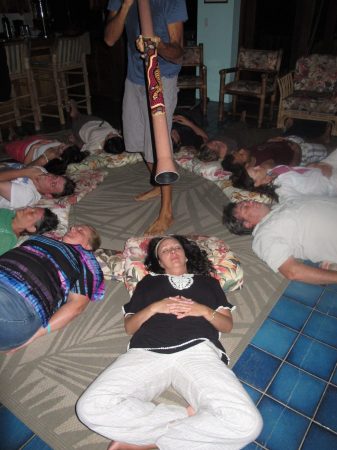
Sound healing has always fascinated me. There’s something deeply primal about the way vibration moves through us—something that bypasses our thinking minds and speaks directly to our bodies. Though I never really learned to play a musical instrument in the traditional sense, I recently took the plunge and invested in a crystal bowl and a tongue drum. This winter, I’m hoping to learn how to coax healing frequencies from these beautiful instruments, adding a new dimension to my own wellness practice.
When Sound Becomes Medicine
My first profound encounter with sound as a living force happened underwater. As a scuba diver, I had the extraordinary privilege of working with dolphins. Beneath the waves, their clicks and excited squeals would surround me—not just as sounds I heard, but as vibrations I felt resonating through the water and into my body. It was my first visceral understanding that sound is not merely auditory; it’s a physical phenomenon that moves through us, touching us at a cellular level.
Since then, I’ve explored sound healing from every angle. I’ve had crystal bowls played on me, their pure tones washing over my body in waves. I’ve experienced the deep, ancient rumble of a didgeridoo played up and down my spine, each note seeming to realign something fundamental within me. Most recently, I’ve sat in chairs that are actual musical instruments—and when sound hits your body in this direct, immersive way, the feeling is nothing short of amazing. It’s like being held by pure vibration, every cell in your body simultaneously relaxing and awakening.
The Science Behind the Sensation
While sound healing might seem mystical, there’s solid science backing its effects. Our bodies are roughly 60% water, and sound waves travel through water approximately four times faster than through air. When we’re exposed to specific frequencies, our cells literally vibrate in response—a phenomenon known as cymatics.
Research has shown that sound therapy can reduce stress hormones, lower blood pressure, and improve sleep quality. A 2016 study published in the Journal of Evidence-Based Integrative Medicine found that participants in Tibetan singing bowl meditation experienced significantly reduced tension, anger, fatigue, and depressed mood. Another study from 2020 demonstrated that sound meditation could decrease tension and increase spiritual well-being in participants.
The mechanism is fascinating: sound waves can influence our brainwave patterns, guiding us from the beta state of normal waking consciousness into alpha (relaxed), theta (meditative), or even delta (deep sleep) states. This is called brainwave entrainment, and it’s the reason why certain frequencies can make us feel instantly calmer or more focused.
The Many Faces of Sound Healing
Sound healing isn’t one single practice—it’s a rich tapestry of traditions and techniques from around the world:
Crystal Singing Bowls produce pure, ethereal tones that can be felt as much as heard. Each bowl is typically tuned to a specific note corresponding to the body’s chakras or energy centers.
Tibetan Singing Bowls, made from metal alloys, create complex harmonic overtones that many practitioners use for deep meditation and energy work.
Gong Baths immerse participants in waves of sound from large gongs, creating an experience so encompassing it can feel like being cleansed by sonic water.
Tuning Forks deliver precise frequencies directly to specific points on the body, similar to acupuncture but with vibration instead of needles.
Drumming Circles have been used in indigenous cultures for millennia to induce trance states, build community, and facilitate healing.
Voice and Toning harness the most accessible instrument we all possess—our own vocal cords—to create healing vibrations from within.
Binaural Beats use technology to present slightly different frequencies to each ear, encouraging the brain to perceive a third frequency and shift into specific states.
Why You Should Bring Sound Healing Into Your Life
In our modern world of constant noise pollution and digital overstimulation, we’ve forgotten what it means to experience sound intentionally, therapeutically. Sound healing offers a bridge back to a more embodied way of being.
Here’s what incorporating sound healing into your life can offer:
Stress Relief Without Effort: Unlike other wellness practices that require learning or discipline, sound healing simply asks you to receive. You don’t have to “do” anything—just allow the vibrations to work on you.
Accessible to Everyone: You don’t need to be musical, flexible, or particularly fit. Sound healing meets you exactly where you are.
Cumulative Benefits: Regular exposure to healing frequencies can recalibrate your nervous system over time, making you more resilient to stress.
Enhanced Meditation Practice: If you struggle with traditional meditation, sound provides an anchor for attention that’s easier for many people to follow than breath alone.
Physical Release: Vibration can help release tension held deep in muscles and fascia, complementing bodywork and physical therapy.
Creative Inspiration: Even as a beginner, playing instruments like crystal bowls or tongue drums can unlock unexpected creativity and provide a meditative flow state.
Beginning Your Own Sound Journey
You don’t need to invest heavily or commit to years of training to benefit from sound healing. Start by attending a sound bath at a local yoga studio or wellness center. Download a meditation app that features binaural beats or singing bowls. If you’re drawn to create rather than just receive, consider a simple instrument like a tongue drum or rain stick—instruments that are almost impossible to play “wrong.”
As I prepare to spend this winter learning my new instruments, I’m reminded that sound healing isn’t about perfection or performance. It’s about relationship—with vibration, with ourselves, with the resonance that connects all living things. Whether you’re floating underwater listening to dolphins, lying beneath the hum of crystal bowls, or simply humming in your shower, you’re participating in one of humanity’s oldest healing traditions.
The body knows how to listen. It’s time we gave it something worth hearing.