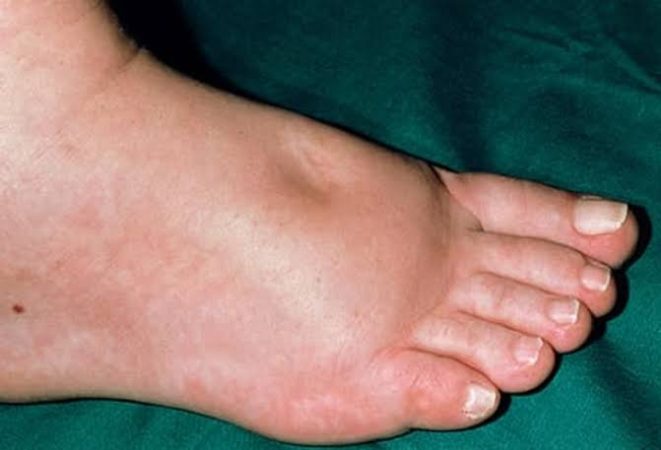
Puffy Feet & Swollen Ankles
What Your Body Is Trying to Tell You — and Natural Ways to Find Relief
As a therapist, I see puffy feet and swollen ankles come across my table constantly — far more than people realize. What genuinely surprises me is how many clients have no idea what’s actually happening in their body when it shows up. They mention it almost in passing, as though it’s just a normal part of aging or a long day on their feet, without ever connecting it to what their circulatory and lymphatic systems are trying to tell them.
This condition has a name — edema — and understanding it is the first step toward doing something about it. Let’s talk about why it happens, when it’s worth taking seriously, and the natural ways I use, both on my table and at home, to help ease it.
What’s Actually Happening When Your Feet and Ankles Swell
Edema happens when excess fluid builds up in the tissues of your lower legs, ankles, and feet. Because fluid follows gravity, it naturally pools in the lowest parts of your body by the end of the day — which is why swelling is often worse in the evening than the morning.
Some of the most common everyday causes include:
- Prolonged sitting or standing — gravity pulls fluid downward, and inactive muscles aren’t pumping blood and lymph back up toward the heart.
- A high-sodium diet — excess salt causes the body to hold onto water, increasing overall fluid volume.
- Heat and travel — hot weather and long flights or car rides are classic triggers.
- Hormonal changes — including pregnancy, menstrual cycles, and menopause.
- Aging — the valves in your leg veins can weaken over time, making it harder for blood to travel back up against gravity, a condition called venous insufficiency.
- Certain medications — including some blood pressure drugs, NSAIDs, and steroids.
For most people, mild swelling that comes and goes with activity or salt intake is nothing to panic about. But persistent, worsening, or sudden swelling is different — and that’s the part I really want people to understand.
The Dangers of Ignoring Persistent Swelling
This is the piece I wish more people knew. Ongoing or sudden edema isn’t always just cosmetic or a sign of a long day — it can be your body’s early warning system for something more serious, including impaired heart, liver, or kidney function, chronic venous insufficiency, or in some cases a blood clot (deep vein thrombosis).
Seek medical attention promptly if swelling is sudden, one-sided, painful, or accompanied by redness, warmth, shortness of breath, chest pain, or skin that looks stretched, shiny, or pits when pressed. These can be signs of a blood clot or a heart, liver, or kidney issue that needs prompt evaluation.
The takeaway isn’t to panic every time your shoes feel a little tight after a long day — that’s usually completely normal. It’s to stop dismissing swelling that’s persistent, worsening, or paired with other symptoms, and to get it properly assessed rather than just covering it up.
Natural Ways to Find Relief
Once anything serious has been ruled out by your doctor, there’s a lot you can do naturally to ease day-to-day swelling and support healthy circulation.
Massage
This is where I spend most of my time with clients. Lymphatic drainage massage uses very light, rhythmic strokes — not deep pressure — to encourage fluid to move out of the tissues and back toward the lymph nodes. The direction matters: strokes always move upward, from the toes toward the heart, never the other way.
A simple version you can do at home:
- Start at the top of the lower leg and use light, slow upward strokes with your palms or thumbs, working from the ankle up toward the knee.
- Move down to the ankle and top of the foot, using the same gentle upward direction.
- Finish with the toes, using your thumb and finger to stroke gently from tip to base.
- Always elevate the leg for a few minutes before and after.
Keep the pressure light — firm, deep-tissue pressure on swollen tissue isn’t more effective, and can actually be uncomfortable or counterproductive. If swelling is severe, sudden, or painful, skip self-massage and see a doctor first.
Essential Oils
In aromatherapy, certain oils are traditionally used to support circulation and lymphatic flow when blended into a massage carrier oil. Cypress (Cupressus sempervirens), juniper berry (Juniperus communis), geranium (Pelargonium graveolens), and grapefruit (Citrus paradisi) are among the most commonly used for this purpose.
A simple circulation-support blend:
- 4 tbsp carrier oil (sweet almond, jojoba, grapeseed, or calendula oil)
- 4 drops cypress essential oil (Cupressus sempervirens)
- 4 drops juniper berry essential oil (Juniperus communis)
- 3 drops geranium essential oil (Pelargonium graveolens)
Calendula (Calendula officinalis) is worth a special mention as your carrier oil here — it’s gentle, soothing, and particularly well suited to skin that’s stretched, tender, or irritated from swelling, which makes it my preferred base for this kind of blend.
Blend well and use a small amount for your upward leg and foot massage. Always dilute essential oils properly before applying to skin, patch test first, and avoid citrus oils like grapefruit or lemon (Citrus limon) before sun exposure, as they can be phototoxic. If you’re pregnant, have a heart condition, or are on blood thinners or blood pressure medication, check with your healthcare provider or a qualified aromatherapist before using essential oils for circulatory support.
Why oil quality matters:
Not all essential oils are created equal, and it makes a real difference here. A genuine, therapeutic-grade, unadulterated essential oil retains the full living synergy of the plant it came from — the very thing that gives it therapeutic value. Cheaper oils are often cut, standardized, or reconstituted with synthetic fragrance to boost scent, which can reduce their effectiveness and increase the risk of skin irritation. Look for pure, naturally farmed or organic oils that have been independently lab-tested, and buy from a supplier who can tell you exactly where and how the oil was produced. It’s worth the investment, especially for anything applied directly to skin.
Diet
What you eat and drink has a direct effect on how much fluid your body holds onto.
- Reduce sodium — cutting back on processed and packaged foods is one of the biggest levers you can pull, since excess salt causes the body to retain water.
- Stay well hydrated — it sounds counterintuitive, but adequate water intake actually helps your body release retained fluid rather than hold onto it.
- Include potassium-rich foods — leafy greens, bananas, sweet potatoes, and beans help balance sodium levels in the body.
- Limit alcohol — alcohol is a known trigger for fluid retention and swelling.
- Move after meals — a short walk supports both circulation and digestion.
Movement and Elevation
Simple habits make a real difference: elevate your feet above heart level for 15–20 minutes a few times a day, avoid sitting or standing in one position for too long, and flex your ankles and calves regularly if your day involves a lot of stillness. Compression socks can also be genuinely helpful for anyone prone to swelling.
As always, this is general wellness information rather than medical advice. If swelling is new, persistent, worsening, or paired with any of the warning signs above, please see your doctor to determine the cause before relying on natural remedies alone.
I see this on my table more often than people expect, and I’d love for more of you to understand what your body is actually asking for when your ankles start telling on you at the end of the day.