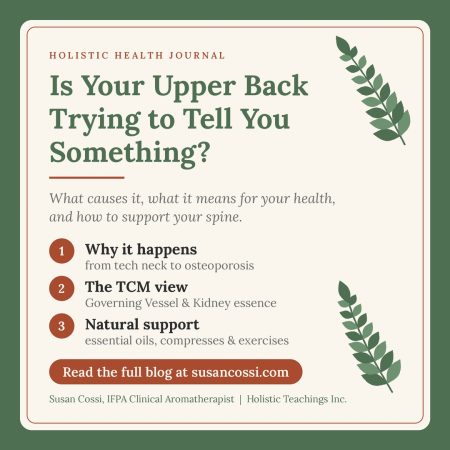
Why it happens, what it means for your health, and how to support your spine naturally
If you’ve noticed a rounded curve forming at the base of your neck or upper back, you’re not alone. The “dowager’s hump” is one of the most common postural changes I see in my practice. It’s often dismissed as a cosmetic concern, but it’s really your body sending a message worth listening to.
What Is a Dowager’s Hump?
The medical term is hyperkyphosis, an exaggerated forward rounding of the upper (thoracic) spine. A healthy spine has a gentle outward curve in the upper back, roughly 20 to 45 degrees. When that curve increases beyond this range, the head and neck are pulled forward and a visible hump forms.
It’s often confused with a “buffalo hump,” a fatty deposit at the base of the neck. A buffalo hump is soft tissue and can be linked to long-term corticosteroid use or hormonal conditions such as Cushing’s syndrome. A dowager’s hump is structural, so if you’re unsure which you have, have your doctor take a look.
Why Do People Get It?
The name comes from an older observation: it was commonly seen in older women. Today we know it affects people of all ages and genders, and the causes fall into a few groups.
Postural and lifestyle causes
- Prolonged sitting, desk work, driving, and screen time (“tech neck”)
- Habitual forward head posture, which adds serious load to the neck and upper back. Every inch the head drifts forward multiplies the strain on the spine.
- Weak upper back and deep neck muscles paired with tight chest and shoulder muscles
- Carrying heavy bags, or breastfeeding and caregiving postures held for years
Structural and medical causes
- Osteoporosis, where small compression fractures in the vertebrae cause them to collapse into a wedge shape, gradually curving the spine. Many of these fractures are painless and go unnoticed.
- Degenerative disc disease and arthritis of the spine
- Scheuermann’s disease in adolescents
- Age-related muscle loss (sarcopenia)
- Genetics and family history
- Long-term steroid use, which can weaken bone
Hormonal and nutritional contributors
- Declining estrogen after menopause, which speeds up bone loss
- Low calcium, vitamin D, magnesium, or protein intake
- Low body weight, smoking, and excess alcohol, which all affect bone density
Health Concerns: More Than a Cosmetic Issue
A rounded upper back changes how your whole body functions. Here is what can be affected:
- Reduced lung capacity. A curved thoracic spine restricts rib cage movement, so breathing becomes shallower.
- Neck and shoulder pain. The muscles work overtime holding up a forward-positioned head.
- Tension headaches. Tight suboccipital muscles at the base of the skull are a common trigger.
- Balance problems and increased fall risk. A shifted center of gravity makes falls more likely, and falls are especially dangerous with fragile bones.
- Vertebral fractures. When osteoporosis is the cause, each fracture raises the risk of another.
- Digestive discomfort and reflux. A slumped torso compresses the abdominal organs.
- Jaw (TMJ) strain. Forward head posture alters how the jaw sits and moves.
- Nerve irritation. Tingling or numbness in the arms or hands can occur from compressed nerves in the neck.
- Limited mobility. Difficulty lifting the arms overhead, looking up, or lying flat comfortably.
- Emotional impact. Changes in appearance and chronic discomfort can affect confidence and mood.
When to see your healthcare provider promptly: loss of height (more than about 4 cm or 1.5 inches), new or severe back pain, numbness or weakness in the limbs, changes in bladder or bowel control, or a hump that appears quickly. A bone density scan (DXA) is a wise step for anyone at risk of osteoporosis.
The Traditional Chinese Medicine Perspective
TCM doesn’t see the spine as isolated bones and muscle. It sees a river of energy, and the upper back is where several important pathways meet.
The Governing Vessel (Du Mai) runs up the centre of the spine and is called the “sea of yang.” It carries the body’s yang energy and supports uprightness, strength, and vitality. A collapsing, forward-folding posture suggests the yang is not rising as it should.
The Kidneys govern the bones. In TCM, Kidney essence (jing) nourishes bone and marrow. Weakening bones, height loss, and a stooped posture with age are viewed as Kidney essence and Kidney yang declining. This fits neatly with what Western medicine sees in osteoporosis.
The Liver governs the sinews. Liver blood nourishes tendons and muscles. When it is deficient or stagnant, you get stiffness, tension, and poor flexibility in the back and neck.
The Bladder meridian runs along both sides of the spine, and its points on the upper back correspond to the organs. Chronic tension here reflects imbalance in the corresponding organ systems.
Qi and blood stagnation from long hours of stillness, and Wind-Cold invasion at the back of the neck (an area TCM guards closely, which is why grandmothers insist on scarves), can leave the upper back rigid and painful.
There’s also an emotional layer. The Lung governs the chest and is associated with grief, and the shoulders are said to carry burdens. Many practitioners note that people who “carry the weight of the world” often fold forward. Whether or not you take that literally, it’s a lovely invitation to check in with how you’re holding yourself, physically and emotionally.
TCM approaches include
- Acupuncture to release tension, improve circulation, and support pain relief. The evidence is stronger for neck and back pain than for correcting the curve itself.
- Moxibustion, warming key points (such as those along the Governing Vessel and Bladder meridian) to tonify yang and disperse cold
- Cupping and gua sha for tight, stagnant upper back and neck muscles
- Tui na (therapeutic massage)
- Qigong and Tai Chi, particularly the Baduanjin (“Eight Pieces of Brocade”), which emphasize spinal length, opening the chest, and balance. Research supports Tai Chi for balance and fall prevention.
- Kidney-nourishing foods, such as black sesame, black beans, walnuts, bone broth, and dark leafy greens, alongside keeping the lower back and neck warm
Natural Remedies and Aromatherapy
An honest note: essential oils, poultices, and herbs can ease muscle tension, pain, and stiffness, and they can support relaxation and circulation. They cannot by themselves reverse a structural curve, especially one caused by vertebral fractures. Think of them as comfort and support alongside posture work, movement, and good nutrition.
Essential Oils for Upper Back and Neck Tension
Blend in a carrier oil (sweet almond, jojoba, arnica-infused oil, Calendula or St. John’s wort oil). For adults, a 2 to 3 percent dilution is typical for massage, which is about 12 to 18 drops per 30 ml of carrier. Use 1 percent or less for the elderly, frail, or those with sensitive skin.
- Sweet marjoram (Origanum majorana): a classic for tight, spasming muscles
- Lavender (Lavandula angustifolia): calming, eases tension headaches
- Black pepper (Piper nigrum) and ginger (Zingiber officinale): warming, stimulating to circulation
- Rosemary (Rosmarinus officinalis): warming for stiff muscles. Choose the chemotype carefully and avoid in epilepsy or high blood pressure.
- Roman chamomile (Chamaemelum nobile): soothes irritated, overworked tissue
- Frankincense (Boswellia carterii): traditionally used for joint and tissue comfort and for calming the breath
- Peppermint (Mentha × piperita): cooling relief at the base of the skull. Use lightly and never on the face or near children under 6.
A simple neck and shoulder blend: 30 ml jojoba or almond oil, with 6 drops sweet marjoram, 5 drops lavender, and 4 drops black pepper. Massage into the upper back, base of the neck, and shoulders.
Safety: Always patch test, avoid broken skin, and keep oils away from eyes. Use extra caution in pregnancy, with epilepsy, and with children. Consult a qualified aromatherapist if you’re unsure.
Poultices and Compresses
- Ginger poultice or compress: Grate fresh ginger, steep in hot (not boiling) water, and apply a cloth soaked in the infusion over the upper back. It brings warmth and improves circulation.
- Castor oil pack: Soak flannel in castor oil, place over the area, cover with plastic, and add gentle heat for 30 to 45 minutes. Traditionally used for stiffness and tension.
- Warm herbal compress: Chamomile, lavender, and calendula flowers steeped and applied as a warm cloth.
- Epsom salt bath: Magnesium sulfate soaks with a few drops of lavender or marjoram (dispersed in a little carrier oil first) relax tight muscles.
- Comfrey leaf poultice: Traditionally used for musculoskeletal support, for external use on intact skin and short-term only, due to its pyrrolizidine alkaloid content. Never use on broken skin or during pregnancy.
Herbs and Nutrition for Bone Support
- Nettle, oat straw, and horsetail infusions are mineral-rich traditional tonics. They’re a nourishing addition to the diet, though the evidence that they build bone is limited.
- Calcium, vitamin D, vitamin K2, magnesium, and adequate protein are the real foundation. Osteoporosis Canada offers age-specific guidelines, and it’s best to have your vitamin D level checked before supplementing.
- Weight-bearing exercise and resistance training matter as much as any nutrient.
Prevention and Correction
Here is where the good news is. Postural kyphosis, the kind that develops from habits, is often very responsive to change. Structural kyphosis from fractures or bone changes usually can’t be fully reversed, but it can be stabilized, and the pain and function can improve significantly.
Daily habits
- Raise screens to eye level and take movement breaks every 30 minutes
- Practice “chin tucks”: gently draw the head straight back as if making a double chin, hold 5 seconds, repeat 10 times
- Sleep on a supportive pillow that keeps the neck neutral
- Carry loads evenly, or use a backpack with both straps
Exercises to strengthen and open
- Back extensor strengthening (with guidance from a physiotherapist)
- Rows and scapular squeezes to strengthen the mid-back
- Doorway chest stretches to release tight pectorals
- Wall angels and thoracic extension over a rolled towel
- Yoga, Pilates, Tai Chi, and qigong for alignment, balance, and body awareness
- Swimming and walking for overall conditioning
If you have osteoporosis or a history of fractures, avoid deep forward bending and twisting under load and work with a qualified physiotherapist or kinesiologist first.
Bone health
- Ask your doctor about bone density testing, particularly after menopause
- Don’t smoke, and limit alcohol
- Eat a mineral-rich, whole-food diet with adequate protein
Can it be cured? For postural cases, consistent work over months can noticeably improve the curve. For structural cases, the aim is to prevent progression, ease pain, protect the bones, and improve function and posture as much as possible. Both deserve care and patience.
A Final Thought
Your spine is your central pillar, and both Eastern and Western wisdom agree on this: uprightness comes from strength, nourishment, and ease, not from forcing yourself into rigid posture. Move often, nourish your bones, warm and tend your back, and be kind to the body that carries you.
Susan Cossi
IFPA-Accredited Clinical Aromatherapist and Holistic Health Practitioner | Holistic Teachings Inc. | susancossi.com
This article is for educational purposes and isn’t a substitute for medical advice. Please consult your healthcare provider before beginning any new treatment, especially if you’re pregnant, take medications, or have a medical condition.