Herbs · Essential Oils · Qi Gong · Aromatherapy · Vagus Nerve · Exercise
Science-backed natural strategies for every stage of life
Why Men Develop Prostate Problems
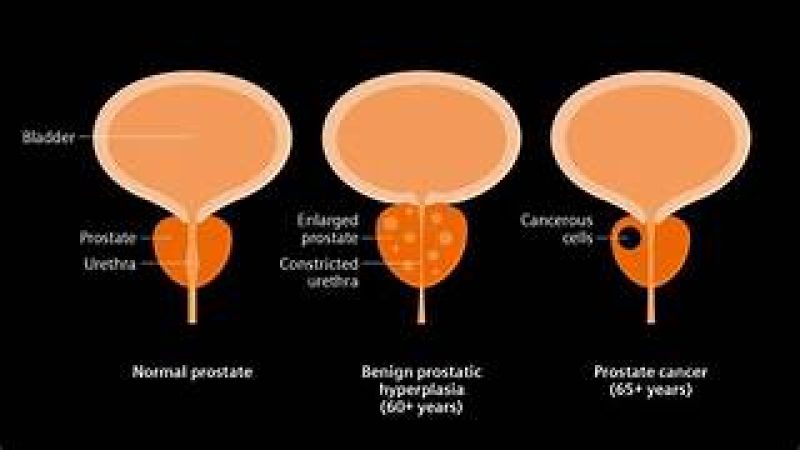
The prostate gland — a walnut-sized structure surrounding the urethra at the base of the bladder — naturally enlarges with age. The primary driver is dihydrotestosterone (DHT), a potent androgen converted from testosterone by the enzyme 5-alpha reductase. Elevated DHT, combined with chronic low-grade inflammation, promotes cellular proliferation in the prostate tissue, leading to benign prostatic hyperplasia (BPH).
By age 60, over 50% of men show histological evidence of BPH; by age 85, this figure exceeds 90% (Roehrborn, Rev Urol, 2005). Sedentary lifestyles, metabolic syndrome, obesity, insulin resistance, and chronic psychological stress all accelerate this process by elevating inflammatory cytokines (TNF-α, IL-6) and disrupting the estrogen-to-testosterone ratio. The good news is that consistent lifestyle, dietary, and movement interventions have demonstrated measurable, clinically significant benefits.
Herbal & Botanical Remedies
Saw Palmetto
Serenoa repens
The most comprehensively studied botanical for BPH. Inhibits 5-alpha reductase, reducing DHT-driven prostate growth, and also possesses anti-inflammatory properties through inhibition of COX-1 and COX-2 enzymes.
| Recipe320 mg standardised extract daily (85-95% fatty acids) as a capsule, ORTea: 2 tsp dried saw palmetto berries, steep in 250 ml boiling water for 10-15 minutes. Drink once daily.Best taken with food to enhance absorption of fatty acids. |
Evidence: Cochrane review (Tacklind et al., 2009): modest but consistent improvement in urinary flow and symptom scores vs placebo across multiple RCTs.
Pygeum
Prunus africana
African plum bark extract reduces prostate inflammation and inhibits prostate-specific growth factors (EGF, bFGF) linked to hyperplasia. Also contains pentacyclic triterpenoids that reduce prolactin-mediated cholesterol uptake in the prostate.
| Recipe100-200 mg standardised bark extract daily, split into two doses with meals.Look for extracts standardised to 12-13% phytosterols. |
Evidence: Ishani et al., Am J Med 2000: significant symptom reduction vs placebo across 18 randomised controlled trials.
Stinging Nettle Root
Urtica dioica
Modulates sex hormone-binding globulin (SHBG), reducing free estrogen levels in the prostate. Also inhibits prostate cell Na+/K+ ATPase and reduces 5-alpha reductase activity.
| Tea Recipe1-2 tsp dried nettle root in 250 ml water.Simmer (not boil) for 15 minutes. Strain and drink 1-2 cups daily.Alternatively: 300-600 mg standardised root extract capsule daily. |
Evidence: Safarinejad, J Herb Pharmacother, 2005: significant improvement in International Prostate Symptom Score (IPSS) after 6 months of use.
Green Tea
Camellia sinensis
Rich in epigallocatechin gallate (EGCG), a polyphenol that inhibits 5-alpha reductase, down-regulates androgen receptor expression, and exerts anti-proliferative effects on prostate epithelial cells via modulation of the PI3K/Akt pathway.
| Recipe3-4 cups brewed green tea daily. Use 80°C water (not boiling) and steep 2-3 minutes.Add a squeeze of lemon — vitamin C increases EGCG bioavailability by up to 13x.Or: 400-800 mg EGCG standardised extract daily. |
Evidence: Bettuzzi et al., Cancer Res, 2006: green tea catechins significantly reduced progression from high-grade PIN to prostate cancer in a randomised trial.
Essential Oils & Therapeutic Blends
Frankincense & Cypress Anti-Inflammatory Blend
Boswellia sacra / carterii & Cupressus sempervirens
Boswellic acids (specifically AKBA — acetyl-keto-beta-boswellic acid) are potent inhibitors of 5-lipoxygenase (5-LOX), blocking leukotriene synthesis, a key inflammatory pathway in prostate tissue. Cypress essential oil improves venous and lymphatic circulation in the pelvic region.
| Topical Blend Recipe (for external use only — never ingest essential oils)3 drops Boswellia (frankincense) essential oil2 drops Cypress (Cupressus sempervirens) essential oil1 drop Sandalwood (Santalum album) essential oilDilute in 1 tablespoon (15 ml) fractionated coconut oil or jojoba oil.Massage gently over the lower abdomen and perineum area nightly before bed.Perform gentle circular massage for 5-10 minutes to enhance absorption. |
Evidence: Gupta et al., Phytomedicine, 2011: AKBA demonstrated significant anti-proliferative effects on prostate cancer cells in vitro.
Pumpkin Seed Oil
Cucurbita pepo
Cold-pressed pumpkin seed oil is rich in beta-sitosterol (a phytosterol that competitively inhibits 5-alpha reductase), delta-7-sterols, and zinc — all critical for DHT regulation and prostate cell membrane integrity. Unlike aromatic essential oils, this is a therapeutic fixed oil taken internally.
| Recipe1 tablespoon (15 ml) cold-pressed, unrefined pumpkin seed oil daily.Drizzle over salads, mix into yoghurt, or take directly from a spoon.IMPORTANT: Never heat this oil — high heat destroys active phytosterols.Alternatively: 500 mg pumpkin seed oil capsules, 2x daily with meals. |
Evidence: Friederich et al., Fortschritte der Medizin, 2000: significant improvement in IPSS urinary symptom scores after 3 months supplementation.
Aromatherapy Prostate Massage Protocol
Combining therapeutic essential oils with targeted abdominal massage improves pelvic blood flow, reduces pelvic floor tension associated with chronic prostatitis, and activates the parasympathetic nervous system — reducing inflammation-driving cortisol and sympathetic tone. The perineal and lower abdominal region has rich lymphatic drainage that can become congested with a sedentary lifestyle.
| Full Aromatherapy Massage Blend & ProtocolBLEND (mix in a small amber glass bottle): 4 drops Frankincense (Boswellia sacra) — anti-inflammatory 3 drops Lavender (Lavandula angustifolia) — relaxes pelvic floor muscles 2 drops Cypress (Cupressus sempervirens) — improves pelvic circulation 2 drops Ginger (Zingiber officinale) — warming, stimulates circulation 1 drop Clary Sage (Salvia sclarea) — hormone-modulating phytoestrogens Diluted in 2 tablespoons (30 ml) carrier oil (fractionated coconut or sweet almond) PROTOCOL (10-15 minutes, nightly): 1. Lie comfortably on your back, knees bent. 2. Warm a small amount of blend in your palms. 3. Apply slow circular strokes over the lower abdomen (below navel). 4. Use gentle inward pressure along the inner thighs toward the groin. 5. Breathe slowly and deeply throughout (diaphragmatic breathing). 6. Finish with gentle perineal massage through clothing if comfortable. |
Anti-Inflammatory Foods & Recipes
Daily Prostate Support Smoothie
This smoothie combines synergistic compounds: lycopene (tomato), ellagitannins (pomegranate), curcumin (turmeric), and lignans (flaxseed) — each targeting different aspects of prostate inflammation and hormonal balance.
| Blend Together (1 serving)1 cup pomegranate juice (Punica granatum) — ellagitannins reduce PSA velocity1/2 cup cooked or canned tomato (Solanum lycopersicum) — lycopene1 tbsp ground flaxseed (Linum usitatissimum) — lignans modulate estrogen1 tsp turmeric powder (Curcuma longa) + pinch black pepper (enhances absorption 2000%)1 tbsp pumpkin seeds (Cucurbita pepo) — zinc and phytosterols1 cup unsweetened almond milkBlend 60 seconds. Drink immediately for maximum antioxidant potency. |
Evidence: Pantuck et al., Clin Cancer Res, 2006: pomegranate juice significantly slowed PSA doubling time in prostate cancer patients. Giovannucci et al., J Natl Cancer Inst, 2002: lycopene associated with reduced prostate cancer risk.
Anti-Inflammatory Zinc & Mineral Tea
Zinc concentration in the prostate gland is higher than in any other organ in the body. Prostate zinc deficiency impairs citrate secretion, increases DNA damage susceptibility, and is closely associated with BPH progression.
| Steep 12-15 minutes, drink 1-2 cups daily1 tsp nettle leaf (Urtica dioica) — zinc, iron, anti-inflammatory1 tsp horsetail (Equisetum arvense) — silica, antioxidant1/2 tsp dried pumpkin seed powder (Cucurbita pepo) — zinc1/4 tsp dried ashwagandha root (Withania somnifera) — cortisol modulationRaw honey to taste. Steep in 350 ml just-boiled water. |
Qi Gong for Prostate Health
Qi Gong (also written Qigong) is a traditional Chinese mind-body practice combining slow movement, breathwork, and meditative intention. For prostate health specifically, Qi Gong targeting the lower Dan Tian — the energy centre located approximately 5 cm below the navel, directly overlying the prostate region — has been shown to improve pelvic circulation, reduce chronic inflammation markers, and strengthen the pelvic floor musculature.
A 2021 pilot study (Liu et al., Complement Ther Clin Pract) found that 8 weeks of daily Qi Gong practice reduced IPSS scores and inflammatory biomarkers (IL-6, CRP) in men with BPH. Practice 20-30 minutes daily, ideally morning or evening.
1. Kidney Strengthening Qi Gong (Shen Qi Gong)
In Traditional Chinese Medicine, the kidneys govern reproductive and urinary health. This exercise stimulates the kidney meridian and warms the lower Dan Tian.
| Practice InstructionsStand with feet shoulder-width apart, knees softly bent.Place both palms over the lower back/kidney area.Rub vigorously in circular motions 36 times, generating warmth.Then place palms over the lower abdomen (Dan Tian), one hand on the other.Breathe in deeply, allowing the belly to expand. Exhale slowly.Perform gentle clockwise circles with your hands over the lower abdomen.36 repetitions, twice daily — morning and before bed. |
2. The Whole Body Shaking (Zhan Zhuang Shaking)
This deceptively simple exercise vibrates the entire fascial network, stimulates lymphatic drainage in the pelvis, and has been shown to reduce cortisol and systemic inflammation.
| Practice InstructionsStand barefoot on a natural surface if possible (grass/earth ideal).Bend knees slightly. Let arms hang loosely at your sides.Begin gentle bouncing by slightly raising and lowering your heels.Allow the vibration to travel up the legs, through the pelvis, into the torso.Let everything shake freely — jaw, arms, abdomen, pelvis.Breathe naturally throughout. Duration: 5-10 minutes daily.Finish by standing still, hands on Dan Tian, observing sensations. |
3. Ba Duan Jin — ‘Eight Pieces of Brocade’ (Pose 7: Fist Clenching)
Ba Duan Jin — Seven: Clench Fists and Glare
This classical sequence increases overall Qi circulation. The seventh movement specifically engages the adrenal glands and kidney meridian, stimulating hormonal balance and pelvic vitality.
| Practice InstructionsBegin in horse stance: feet wide, knees bent as if sitting on a horse.Make loose fists at hip height, palms facing upward.Inhale: punch the right fist forward slowly with intensity, eyes wide (the ‘glare’).Exhale: slowly retract, open hand, and return to starting position.Alternate left and right. Perform 8-16 repetitions each side.The muscle tension in horse stance activates the pelvic floor and prostate region. |
Vagus Nerve Activation
The vagus nerve (cranial nerve X) is the primary highway of the parasympathetic nervous system, connecting the brain to virtually every major organ including the prostate. Chronic stress drives sympathetic dominance, elevating cortisol, TNF-α, and IL-6 — all of which directly accelerate prostate inflammation and BPH progression.
Improving vagal tone (measured as heart rate variability, or HRV) creates a systemic anti-inflammatory effect. Higher vagal tone is associated with lower levels of CRP, IL-6, and NF-κB — the central inflammatory transcription factor implicated in both BPH and prostate cancer (Thayer & Sternberg, Ann NY Acad Sci, 2006).
Diaphragmatic (4-7-8) Breathing
The vagus nerve runs alongside the diaphragm. Slow, deep diaphragmatic breathing directly stimulates vagal afferents, rapidly shifting the autonomic nervous system toward parasympathetic dominance.
| Daily Protocol — 10 minutes, morning and eveningSit or lie comfortably. Place one hand on chest, one on belly.Inhale through nose for 4 counts — only the belly hand should rise.Hold the breath gently for 7 counts.Exhale slowly through the mouth for 8 counts (making a soft ‘whoosh’).This 4-7-8 ratio maximises parasympathetic activation.Perform 6-8 cycles per session. HRV measurably increases after 4 weeks of practice. |
Cold Water Stimulation
Brief exposure to cold water on the face activates the diving reflex (trigeminovagal reflex), producing immediate and powerful vagal activation. This is one of the fastest known methods to shift autonomic tone.
| Protocol (30 seconds, anytime)Fill a bowl or sink with cold water (10-15°C, with ice if needed).Take a deep breath, hold it, and submerge your face for 20-30 seconds.Alternatively: end each shower with 30-60 seconds of cold water.Repeat 2-3 times per session for enhanced vagal activation.NOTE: Consult a doctor before cold exposure if you have cardiac conditions. |
Humming, Chanting & Gargling
The vagus nerve innervates the muscles of the larynx and pharynx. Vibratory practices directly stimulate vagal branches, increasing parasympathetic output and reducing systemic inflammation.
| Daily Practices (choose any)HUM: Sit quietly, inhale fully, and hum on the exhale for its full length. Repeat 10x.OM chanting: The resonant frequency of ‘OM’ creates intracranial vibration that activates the vagus via the auricular branch. Chant for 5-10 minutes.GARGLE: Gargle vigorously with water for 30-60 seconds, 2x daily.SINGING: Even casual singing or humming to music activates vagal pathways.These practices also reduce cortisol and improve HRV within 4 weeks of consistency. |
Targeted Exercise Programme
Kegel Exercises (Pelvic Floor Training)
The pelvic floor musculature (levator ani, pubococcygeus, bulbocavernosus) directly surrounds the prostate. Strengthening these muscles improves urinary control, pelvic circulation, and reduces pelvic floor hypertonicity associated with chronic prostatitis.
| Protocol — 3x daily, every dayIdentify the muscles: stop urination mid-flow (do not do this regularly — just to identify).CONTRACT: Squeeze the pelvic floor for 5 seconds, then release for 5 seconds.Perform 10 repetitions per set, 3 sets per session.Progress to 10-second holds as strength improves.Also try ‘quick flicks’: rapid 1-second contractions x 20, twice daily. |
Evidence: Dorey et al., BJU International, 2005: pelvic floor training produced significant improvement in urinary symptoms and flow rates in BPH patients.
Aerobic Walking
Brisk walking reduces systemic inflammation (lowering CRP and IL-6), improves insulin sensitivity (elevated insulin promotes prostate growth factor signalling), and reduces sympathetic nervous system tone.
| Protocol30-45 minutes of brisk walking, 5 days per week.Target pace: 100-120 steps per minute (you should be able to talk, but not sing).Include hills where possible to engage the pelvic floor.Walk barefoot on grass occasionally (earthing) to further reduce inflammatory markers. |
Evidence: Giovannucci et al., Arch Intern Med, 1998: men exercising vigorously for 3+ hours/week had a 25% lower risk of BPH.
Resistance Training
Compound resistance training optimises the testosterone-to-estrogen ratio, reduces adipose-derived inflammatory cytokines (adipose tissue produces aromatase, which converts testosterone to estradiol — a driver of prostate growth), and increases insulin sensitivity.
| Protocol — 2-3 sessions per weekFocus on compound movements: squats (Goblet or Back), deadlifts, Romanian deadlifts.3-4 sets of 8-12 repetitions per exercise.Squats and deadlifts specifically activate the pelvic floor and stimulate testosterone.Rest 60-90 seconds between sets. Prioritise form over load. |
Evidence: Camacho et al., Eur J Endocrinol, 2013: structured exercise programme significantly raised free and total testosterone in hypogonadal men.
Yoga — Hip & Pelvic Openers
Specific yoga poses dramatically increase blood flow to the pelvic organs, release fascial tension around the prostate, and activate the parasympathetic nervous system through breath coordination.
| Key Poses (hold each 60-90 seconds)Pigeon Pose (Eka Pada Rajakapotasana) — deep hip external rotation, opens piriformis.Happy Baby (Ananda Balasana) — opens sacroiliac joint, stretches pelvic floor.Butterfly / Bound Angle (Baddha Konasana) — medial thigh and groin release.Reclined Spinal Twist (Supta Matsyendrasana) — mobilises the sacrum and pelvic fascia.Legs Up the Wall (Viparita Karani) — reverses venous/lymphatic stasis in the pelvis.Perform this sequence 3-4 times per week, ideally after aerobic exercise. |
Evidence: Cramer et al., Eur Urol, 2016: yoga intervention significantly reduced prostate cancer-related urinary and sexual symptoms in a randomised controlled trial.
Important Disclaimer
This guide is for educational and informational purposes only. It does not constitute medical advice, diagnosis, or treatment. The information presented here is not a substitute for consultation with a qualified healthcare provider. Men with elevated PSA levels, diagnosed BPH, prostatitis, or prostate cancer should always seek medical supervision before commencing any supplement, herbal, or intensive exercise programme. Essential oils must never be ingested and should always be properly diluted before topical application. Individual results vary, and natural interventions work best as complements to — not replacements for — evidence-based medical care.