Herbs · Essential Oils · Qi Gong · Aromatherapy · Vagus Nerve · Exercise
Science-backed natural strategies for urinary tract health
Why People Get Urinary Tract Infections
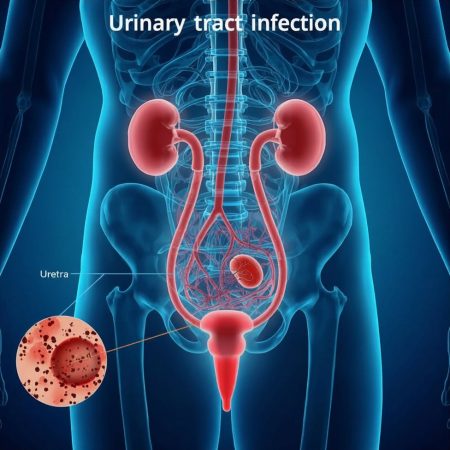
A urinary tract infection (UTI) occurs when bacteria — most commonly Escherichia coli (responsible for approximately 80-85% of cases) — colonise the urethra, bladder (cystitis), ureters, or kidneys (pyelonephritis). E. coli achieves this by expressing type 1 and P fimbriae — hair-like adhesion proteins that bind to uroplakin receptors lining the urothelium, allowing the bacteria to resist being flushed out during urination.
Women are disproportionately affected: the female urethra is approximately 4 cm long compared to 20 cm in men, providing a significantly shorter pathway for bacterial ascent. Around 50-60% of women will experience at least one UTI in their lifetime, and 20-30% of those will suffer recurrent infections (Foxman, Am J Med, 2002). Risk factors include sexual activity, hormonal changes (particularly menopause-related loss of Lactobacillus-dominant vaginal flora), use of spermicides, catheterisation, diabetes, urinary retention, and immune suppression.
At the cellular level, UTIs trigger a robust inflammatory cascade: urothelial pattern recognition receptors (Toll-like receptor 4) detect bacterial lipopolysaccharide (LPS), activating NF-κB and releasing pro-inflammatory cytokines (IL-6, IL-8) that drive the burning, urgency, and frequency characteristic of the infection. Natural interventions target bacterial adhesion, urinary pH, immune modulation, and the inflammatory response simultaneously.
Herbal & Botanical Remedies
Cranberry
Vaccinium macrocarpon
The most extensively studied botanical for UTI prevention. Cranberry’s active compounds — type-A proanthocyanidins (PACs) — interfere with the fimbriae of E. coli, preventing bacterial adhesion to the uroepithelium. Crucially, cranberry prevents colonisation rather than treating active infection, making it best used as a preventive strategy.
| Recipe & Protocol Prevention: 36 mg PAC standardised cranberry extract daily (capsule form is preferable to juice, which is high in sugar and diluted in active compounds). Cranberry tea: steep 1 tbsp dried cranberries + 1 tsp hibiscus in 300 ml water, 10 min. If using juice: 240 ml pure unsweetened cranberry juice daily (not cocktail blends). Combine with D-mannose (see below) for synergistic anti-adhesion effect. |
Evidence: Stapleton et al., Clin Infect Dis, 2012: cranberry extract reduced UTI recurrence by 39% vs placebo in premenopausal women. Cochrane review (Jepson et al., 2012): consistent evidence for prevention, not treatment.
D-Mannose
A naturally occurring simple sugar found in cranberries, apples, and peaches
D-mannose is a monosaccharide that is filtered by the kidneys and excreted in high concentrations in urine. It competitively binds to the mannose-specific type 1 fimbriae of E. coli, saturating the adhesin binding sites and causing bacteria to be flushed away during urination rather than adhering to bladder walls. Unlike antibiotics, D-mannose does not disturb the gut or vaginal microbiome.
| Protocol Prevention: 2 g D-mannose powder daily in a glass of water. Active infection support: 2 g every 2-3 hours for the first 24 hours, then 2 g twice daily for 5 days. Always take with 500 ml water to promote urinary flushing. Post-intercourse dose: 2 g within 1 hour of sexual activity as a preventive measure. Safe for long-term use; does not affect blood glucose at these doses in healthy individuals. |
Evidence: Kranjcec et al., World J Urol, 2014: D-mannose powder was as effective as nitrofurantoin at preventing recurrent UTI, with significantly fewer side effects.
Uva Ursi (Bearberry)
Arctostaphylos uva-ursi
Uva ursi leaves contain arbutin, a glycoside hydrolysed in the alkaline urine to hydroquinone — a potent urinary antiseptic active against E. coli, Staphylococcus, Pseudomonas, and Candida. It also contains ursolic acid, which has demonstrated anti-inflammatory activity in the urothelium.
| Tea Recipe 1-2 tsp dried uva ursi leaves in 250 ml cold water. COLD INFUSION METHOD: soak for 12-24 hours (cold water extracts arbutin more effectively and reduces tannin content, which can irritate the stomach). Drink 1-3 cups daily for maximum 7-10 days. Do not use long-term. Requires alkaline urine for activation: take with 1/4 tsp sodium bicarbonate in water. |
Evidence: Larsson et al., Curr Ther Res, 1993: uva ursi extract significantly reduced UTI recurrence at 12 months vs placebo in a double-blind trial.
Goldenrod
Solidago virgaurea
A traditional urinary herb with dual action: anti-inflammatory (inhibits COX-1, COX-2 and 5-LOX) and aquaretic (increases urine volume without electrolyte loss, flushing the urinary tract). Also contains flavonoids (rutin, quercetin) that reduce urothelial inflammation and inhibit bacterial adhesion.
| Tea Recipe 2 tsp dried goldenrod herb in 250 ml boiling water, steep 10-15 minutes. Drink 3 cups daily during active symptoms; 1 cup daily for prevention. Combine with corn silk (Zea mays stigmata) for enhanced soothing effect on the bladder. Available as standardised extract: 350-450 mg daily. |
Evidence: Melzig, Wien Med Wochenschr, 2004: Solidago preparations demonstrated significant anti-inflammatory and diuretic activity, supporting their traditional use in urinary infections.
Horsetail
Equisetum arvense
Rich in silica, flavonoids (kaempferol, quercetin), and saponins, horsetail has demonstrated antimicrobial activity against E. coli and Staphylococcus aureus, while also acting as a mild aquaretic to flush the urinary tract. Its high silica content also supports connective tissue integrity of the urothelium.
| Tea Recipe 1-2 tsp dried horsetail in 300 ml water, simmer for 15 minutes. Drink 2-3 cups daily. Pair with uva ursi for active infection support. Or: 300 mg standardised extract capsule, twice daily. |
Evidence: Grases et al., J Ethnopharmacol, 1994: Equisetum arvense demonstrated aquaretic and antioxidant effects relevant to urinary tract health.
Essential Oils & Aromatherapy
Topical Anti-Inflammatory Blend
For external use over the lower abdomen — never ingest essential oils
Essential oils cannot treat a bacterial infection internally, but when applied topically to the lower abdomen (over the bladder) in a carrier oil, compounds such as carvacrol (oregano), thymol (thyme), and terpinen-4-ol (tea tree) are transdermally absorbed in small quantities. More significantly, the heat and massage involved in application improve local circulation and lymphatic drainage, reduce bladder spasm, and activate the parasympathetic nervous system.
| Topical Blend Recipe (external use only) 3 drops Tea Tree (Melaleuca alternifolia) — broad-spectrum antimicrobial 2 drops Bergamot (Citrus bergamia) — antibacterial, antispasmodic on smooth muscle 2 drops Lavender (Lavandula angustifolia) — anti-inflammatory, analgesic, relaxing 2 drops Frankincense (Boswellia sacra) — reduces urothelial inflammation via 5-LOX inhibition 1 drop Oregano (Origanum vulgare) — carvacrol: potent broad-spectrum antibacterial Dilute in 2 tablespoons (30 ml) Sunflower or Sweet Almond oil. Apply with gentle circular massage over the lower abdomen (above pubic bone) 2-3x daily. Cover with a warm compress or hot water bottle for 10-15 minutes to enhance absorption. |
Evidence: Hammer et al., J Appl Microbiol, 1999: tea tree oil (Melaleuca alternifolia) demonstrated significant in vitro activity against E. coli and other common uropathogens.
Aromatherapy Bladder Soothing Compress
Warm compresses over the suprapubic region (lower abdomen) directly relieve bladder spasm, reduce perceived pain intensity, and improve local blood flow to support immune cell activity. The addition of analgesic and antispasmodic essential oils amplifies these effects.
| Warm Compress Protocol Fill a bowl with warm (not scalding) water — 40-43°C. Add 3 drops lavender + 2 drops clary sage (Salvia sclarea) + 2 drops chamomile (Matricaria chamomilla) to the water and stir well. Soak a flannel cloth, wring out, and apply to the lower abdomen. Cover with a dry towel to retain heat. Leave for 15-20 minutes. Repeat 2-3 times daily during acute symptoms. Roman chamomile (Chamaemelum nobile) is a superior alternative if available. |
Anti-Inflammatory Foods & Recipes
UTI Flushing Drink
Adequate hydration is the single most evidence-supported intervention for both UTI treatment and prevention. Increasing urine volume mechanically flushes bacteria before they can form biofilms. This recipe combines high-volume hydration with potent anti-adhesion and anti-inflammatory compounds.
| Recipe (drink throughout the day — make 1 litre) 1 litre filtered water, warm or room temperature Juice of 1 lemon (Citrus limon) — alkalises urine, vitamin C boosts neutrophil activity 1 tbsp pure unsweetened cranberry juice concentrate (Vaccinium macrocarpon) 1 tsp D-mannose powder 1/4 tsp bicarbonate of soda (sodium bicarbonate) — alkalises urine, reduces burning 1 tsp raw apple cider vinegar (Malus domestica — contains malic acid, antimicrobial) 1 tsp raw honey (Apis mellifera) — hydrogen peroxide-producing antibacterial Optional: 3-4 drops liquid olive leaf extract (Olea europaea) — oleuropein: antibacterial Stir well and sip throughout the day alongside an additional 1.5-2 litres of plain water. |
Evidence: Hooton et al., JAMA Intern Med, 2018: increasing daily water intake by 1.5 litres reduced UTI recurrence by 50% in women with recurrent UTIs in a landmark randomised controlled trial.
Immune-Boosting Anti-UTI Broth
This warming mineral-rich broth provides zinc (immune function), allicin (garlic’s antibacterial compound), and anti-inflammatory polyphenols to support the body’s natural defences during and after infection.
| Recipe (serves 2) 1 litre quality vegetable or bone broth (base) 4 garlic cloves (Allium sativum), crushed and rested 10 min before adding — activates allicin 1 inch fresh ginger root (Zingiber officinale), grated — anti-inflammatory gingerols 1 tsp turmeric powder (Curcuma longa) + pinch black pepper — curcumin reduces NF-κB 1 tbsp apple cider vinegar — added after cooking, preserves malic acid Handful of parsley (Petroselinum crispum) — aquaretic, high vitamin C Simmer garlic, ginger, turmeric in broth 15 minutes. Remove from heat, add ACV and parsley. Drink 1-2 cups daily during acute infection; 3x weekly for prevention. |
Evidence: Filocamo et al., Phytomedicine, 2012: garlic extract demonstrated significant antibacterial activity against multidrug-resistant E. coli strains isolated from UTI patients.
Qi Gong for Urinary Tract Health
In Traditional Chinese Medicine, UTIs are associated with heat and dampness in the Lower Jiao (lower burner) — the energetic zone governing the bladder, kidneys, and reproductive organs. Qi Gong practices that cool the Lower Jiao, strengthen kidney Qi, and promote free flow of water metabolism through the San Jiao (Triple Burner) meridian are directly relevant to urinary tract health.
Research has demonstrated that Qi Gong practice reduces systemic inflammatory markers (CRP, IL-6), modulates immune function (improving NK cell activity and immunoglobulin levels), and activates the parasympathetic nervous system — all of which support recovery from and prevention of urinary infection (Oh et al., Am J Chin Med, 2012).
1. Kidney Water Qi Cultivation
Shen Shui Gong — Kidney Water Energy Practice
This practice directly stimulates the kidney meridian (Shaoyin), which governs water metabolism and urinary function in TCM. The kidneys are considered the root of Yin and Yang energy; warming and nourishing them improves overall lower urinary tract function.
| Practice Instructions Stand with feet hip-width apart, knees slightly bent, spine relaxed. Place both palms over the kidneys (lower back, just below the ribs). Rub vigorously in downward strokes 36 times, generating warmth in the kidney area. Then cup the palms and tap gently over the kidney area 36 times. Move hands to the lower abdomen (bladder area). Place one palm over the other. Breathe in deeply, visualising cool, clear water filling the bladder region. On the exhale, visualise heat and infection leaving the body with the outbreath. Perform 36 breath cycles. Practice twice daily — morning and before bed. |
2. Triple Burner (San Jiao) Flushing Exercise
San Jiao Tong Qi — Triple Burner Qi Circulation
The San Jiao meridian governs the transformation and transportation of fluids throughout the body — including urinary metabolism. This sweeping exercise promotes free flow of water Qi through the entire torso, relieving urinary stagnation associated with recurrent UTIs.
| Practice Instructions Stand comfortably. Raise both hands, palms facing downward, above your head. Slowly sweep both hands down the front centreline of the body (governing vessel pathway), fingers pointing inward, maintaining 2-3 cm distance from the body. As hands pass the abdomen, visualise them sweeping heat and inflammation downward. Continue sweeping to below the pubic bone, then shake the hands outward (releasing heat). Return hands overhead and repeat. Perform 18-36 sweeps daily. Breathe out on each downward sweep, in on the return upward. |
3. Lifting the Anus (Hui Yin Point Activation)
Ti Gang — Perineal Lift Practice
Hui Yin (CV-1) is a key acupressure point at the perineum considered in TCM to be the meeting point of all Yin meridians. Rhythmically contracting the perineum and pelvic floor activates this point, strengthens the urogenital muscles, improves pelvic circulation, and is functionally identical to a Kegel exercise — reducing urinary urgency, frequency, and stress incontinence associated with recurrent UTIs.
| Practice Instructions Sit cross-legged or stand comfortably. Inhale slowly and simultaneously contract the anus, perineum, and pelvic floor upward. Hold the contraction for 5-10 seconds while holding the breath gently. Exhale fully and release all muscles completely. Rest 5 seconds. Repeat 10-20 times per session. Perform 2-3 sessions daily. Can be done discreetly at any time. Advanced: on the hold, also draw the lower abdomen (Dan Tian) inward and upward. |
Vagus Nerve Activation
The connection between vagal tone and urinary tract health operates through multiple pathways. The vagus nerve directly innervates the bladder detrusor muscle via the pelvic splanchnic nerves (S2-S4), modulating bladder contraction and the micturition reflex. Parasympathetic dominance is required for normal, complete bladder emptying — sympathetic tone (stress) causes urinary retention, creating stagnant urine that becomes a breeding ground for bacterial colonisation.
Furthermore, the anti-inflammatory reflex arc of the vagus nerve suppresses systemic NF-κB activation — the same pathway triggered by E. coli LPS in the urothelium. Higher vagal tone (measured by heart rate variability, HRV) is associated with faster resolution of inflammatory infections and lower susceptibility to recurrence (Tracey, Nature, 2002).
Resonance Breathing (0.1 Hz Coherence)
Breathing at a rate of approximately 6 breaths per minute (5 seconds in, 5 seconds out) creates a state of cardiovascular resonance that maximally stimulates baroreceptor-mediated vagal afferents, producing the largest possible increase in HRV. This is the most evidence-supported breathing protocol for vagal activation.
| Daily Protocol — 10-20 minutes Sit or lie comfortably. Set a gentle timer or use a breathing app. Inhale through the nose for exactly 5 seconds, filling the belly first then the chest. Exhale through the nose (or pursed lips) for exactly 5 seconds, fully and slowly. This creates 6 breaths per minute — the resonance frequency of the baroreflex. Perform for 10-20 minutes, twice daily for measurable HRV improvement. During active UTI: use immediately when experiencing urgency to reduce bladder spasm. |
Cold Face Immersion (Diving Reflex)
Submerging the face in cold water activates the trigeminovagal (diving) reflex, producing immediate and potent vagal stimulation — within seconds, heart rate drops 10-25%, parasympathetic output surges, and the inflammatory reflex arc is strongly activated. This technique is particularly useful for acute UTI bladder urgency and pain episodes.
| Protocol Fill a bowl with cold water (10-15°C — add ice cubes to achieve this temperature). Take a moderately deep breath, hold it, and submerge your face for 20-30 seconds. Alternatively: apply a bag of frozen peas or ice pack wrapped in cloth to the face. Repeat 2-3 times for deeper vagal activation. Caution: avoid if you have cardiac arrhythmia or uncontrolled hypertension. |
Humming, Singing & Vagal Toning
The auricular branch of the vagus nerve (Arnold’s nerve) innervates the external ear canal and throat musculature. Vibratory vocal practices produce direct mechanical stimulation of vagal branches, rapidly increasing parasympathetic output and reducing the inflammatory cytokine milieu that sustains urinary tract inflammation.
| Daily Practices — choose one or combine EXTENDED HUM: Inhale fully, exhale on a sustained low hum for the full exhalation. Repeat 10 times. Feel the vibration in the chest and abdomen. OM CHANTING: 5-10 minutes of slow, resonant ‘OM’ chanting. The ‘M’ vibration creates intracranial resonance that stimulates the auricular vagal branch. GARGLING: Vigorously gargle with warm salted water for 30-60 seconds, 3x daily. This simultaneously soothes the throat (a common stress manifestation) and tones the vagus. COLD SHOWER SINGING: Singing during the cold phase of a shower combines two vagal activation methods simultaneously. |
Targeted Exercise Programme
Pelvic Floor Training (Kegel Exercises)
Strong pelvic floor muscles ensure complete bladder emptying, reducing the residual urine volume that allows bacterial colonisation. They also maintain the integrity of the urethral sphincter, preventing both stress incontinence (associated with increased UTI risk) and pathological urinary retention. A paradox to note: overly tight (hypertonic) pelvic floors — common in women with chronic pelvic pain and recurrent UTIs — also cause incomplete emptying. In such cases, pelvic floor relaxation exercises are equally important.
| Protocol — 3 sessions daily STRENGTHENING (for weak/underactive floor): Contract pelvic floor fully upward for 5-10 seconds, release completely. 10 repetitions. Quick flicks: rapid 1-second contractions x 20. Twice daily. RELAXATION (for tight/overactive floor — common in recurrent UTI sufferers): Lie on your back, knees bent and falling outward (butterfly position). Consciously release and lengthen the pelvic floor on each exhale. Visualise the pelvic floor as a flower opening downward. Hold 30 seconds, 5 repetitions. IF UNSURE which type applies, consult a pelvic floor physiotherapist. |
Evidence: Bø & Berghmans, Neurourol Urodyn, 2000: pelvic floor training significantly improved urinary urgency and frequency scores in women with lower urinary tract symptoms.
Aerobic Exercise & Walking
Regular aerobic exercise reduces systemic inflammation, improves lymphatic and circulatory function in the pelvic region, and enhances neutrophil and natural killer cell activity — all improving the body’s ability to resist and clear urinary infections. Exercise also reduces BMI, which is an independent risk factor for recurrent UTIs due to perineal moisture and mechanical factors.
| Protocol 30-45 minutes brisk walking or moderate aerobic exercise, 5 days per week. Include specific pelvic circuit walks: alternate 2 minutes normal walking with 2 minutes of walking while performing pelvic floor contractions (Kegel walking). After exercise: ensure immediate change out of damp exercise clothing to prevent perineal bacterial overgrowth. Avoid high-impact exercise (running, jumping) during acute UTI — increases bladder irritation. |
Evidence: Cody et al., Cochrane Database, 2012: lifestyle interventions including exercise significantly reduced urinary tract symptom recurrence in women.
Yoga — Bladder & Pelvic Circulation Poses
Specific yoga poses directly target pelvic blood flow, lymphatic drainage, and bladder positioning. Inversions and hip openers are particularly valuable: inversions shift venous drainage from the pelvis, while hip openers release psoas and piriformis tightness that restricts pelvic circulation and compresses urinary structures.
| Key Poses (hold each 60-90 seconds, practice 4x weekly) Legs Up the Wall (Viparita Karani) — reverses pelvic venous stasis; excellent post-urination. Reclined Butterfly (Supta Baddha Konasana) — opens inner thighs, improves pelvic lymphatics. Child’s Pose (Balasana) — gentle compression on bladder region; calms nervous system. Seated Forward Fold (Paschimottanasana) — stretches posterior pelvic structures. Cat-Cow (Marjaryasana-Bitilasana) — mobilises sacrum, improves sacral nerve function relevant to bladder innervation. Squat (Malasana) — opens pelvic outlet, improves bladder drainage angle. Practice all poses with slow, coordinated breath. Avoid inversions during menstruation. |
Evidence: Huang et al., Female Pelvic Med Reconstr Surg, 2014: yoga and mindfulness-based pelvic floor training reduced urinary urgency and frequency significantly vs control.
Resistance Training & Core Strengthening
Deep core strengthening — particularly of the transversus abdominis and multifidus — provides structural support for the bladder and urethra. A stable pelvic canister (diaphragm, pelvic floor, deep abdominals, multifidus working synergistically) maintains healthy intra-abdominal pressure dynamics, reducing the mechanical stress on the bladder neck that contributes to both urgency and recurrent infection.
| Protocol — 2-3 sessions per week Dead bug: lie on back, extend opposite arm and leg while maintaining neutral spine. 3 x 10. Bird dog: on hands and knees, extend opposite arm and leg. 3 x 12. Glute bridges: strengthens posterior pelvic floor and gluteal support. 3 x 15. Side-lying clamshells: hip abductor strength reduces adductor tension on pelvic floor. 3 x 15. Avoid heavy valsalva-loaded lifts (heavy squats/deadlifts) during active UTI episodes. Resume full training once infection resolved. |
Key Lifestyle Prevention Strategies
Beyond herbs and movement, several lifestyle habits have the strongest evidence base for UTI prevention and should be practised consistently:
Hydration: Aim for pale yellow urine at all times. A minimum of 2.5-3 litres of fluid daily creates the urinary volume needed to mechanically prevent bacterial colonisation (Hooton et al., JAMA Intern Med, 2018).
Urination hygiene: Always urinate within 30 minutes after sexual activity to flush any introduced bacteria. Women should wipe front-to-back. Avoid delaying urination (urinary retention increases infection risk). Ensure complete bladder emptying by double-voiding (urinate, wait 30 seconds, urinate again).
Probiotics: Lactobacillus rhamnosus GR-1 and Lactobacillus reuteri RC-14 have the strongest evidence for UTI prevention — they colonise the vaginal mucosa and competitively exclude E. coli. Oral supplementation of these specific strains (1 billion CFU daily) reduced UTI recurrence by 50% in clinical trials (Reid et al., FEMS Immunol Med Microbiol, 2003).
Clothing: Wear breathable, cotton underwear. Avoid tight synthetic fabrics that increase perineal temperature and moisture — conditions that promote bacterial growth. Change out of wet swimwear promptly.
Diet: Reduce sugar and refined carbohydrate intake — elevated urinary glucose feeds bacterial growth. Increase vitamin C from whole foods (citrus, kiwi, peppers) to acidify urine and enhance immune cell function.
Important Disclaimer
This guide is for educational and informational purposes only and does not constitute medical advice, diagnosis, or treatment. UTIs — particularly those involving fever, back pain, or symptoms in men or children — require prompt medical evaluation, as they may indicate kidney involvement (pyelonephritis) requiring antibiotic treatment. Do not attempt to self-treat a suspected kidney infection with natural remedies alone. Natural interventions are best used as preventive strategies or as supportive complements to — not replacements for — evidence-based medical care. Essential oils must never be ingested. If symptoms worsen, fail to improve within 48 hours, or if you develop fever, chills, or back pain, seek medical attention immediately.