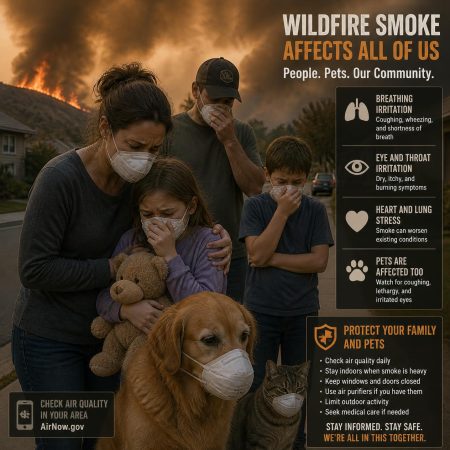
Breathing Through Wildfire Smoke
Herbal & Aromatic Support for Your Lungs, Home & Nervous System
When wildfire smoke settles over Red Deer and Sylvan Lake, the fine particles (PM2.5) in that haze are small enough to slip deep into the lungs and bloodstream. Health authorities are clear: everyone is affected, not just those with asthma or COPD. The first line of defence is always practical — stay indoors with windows shut, run a HEPA filter or a well-sealed HVAC system, skip the vacuum (it stirs up settled particles), and wear a properly fitted N95 if you must go outside. Herbs, essential oils, and targeted nutrients are a supportive layer on top of that foundation — not a replacement for it, and not a substitute for medical care if breathing becomes difficult.
Herbs & Supplements at a Glance
| Herb / Supplement | What It’s Known For |
| Liquid Chlorophyll | Antioxidant plant pigment; research links it to reduced oxidative stress and support for healthy inflammatory response — helpful groundwork when airborne irritants are high. |
| Thymus vulgaris (Thyme) | A traditional expectorant rich in thymol; a 2025 mouse study found thyme leaf extract reduced inflammation and oxidative injury from PM2.5 exposure. Easy to grow in a Zone 3 herb bed. |
| Mullein (Verbascum thapsus) | Gentle expectorant and demulcent; soothes irritated airways and helps mobilize mucus after smoke exposure. A biennial that grows well in prairie gardens. |
| Elecampane (Inula helenium) | Classic root-based expectorant for chronic or wet coughs; long history of use for lung congestion. A hardy Zone 3 perennial. |
| N-Acetylcysteine (NAC) | Precursor to glutathione, the body’s master antioxidant; multiple studies show it lowers PM2.5-driven lung inflammation and oxidative stress. |
| Quercetin | A plant flavonoid (abundant in onions, apples, garden greens) shown in lab studies to reduce oxidative damage from particulate matter exposure. |
| Vitamin C | Water-soluble antioxidant studied for its role in protecting lung function during ozone and pollution exposure. |
General wellness information, not medical advice. Check with your healthcare provider before starting any new herb or supplement, especially if you are pregnant, nursing, or managing a lung or heart condition.
Essential Oil Recipes for Smoky Days
These blends follow standard adult-safe dilution ranges used in professional aromatherapy practice (roughly 1–2% for daily diffusion and topical rubs). They are formulated for healthy adults. Avoid around infants, and use a lighter hand with children, older adults, pregnant women, and anyone with asthma or a seizure disorder — strong aromatics and 1,8-cineole-rich oils can be more irritating than helpful for sensitive airways.
1. Clear-Air Diffuser Blend
Blend: 3 drops Eucalyptus radiata, 3 drops Ravintsara (Cinnamomum camphora ct cineole), 2 drops Lemon.
Or 3 drops Niaouli,3 drops Eucalyptus globulus, 2 drops Lemon
Use: Diffuse in 30–60 minute sessions with breaks in between, rather than running continuously — this follows Tisserand’s inhalation-safety guidance for daily diffuser use.
2. Chest & Back Rub
Blend: 10 drops Eucalyptus globulus, 6 drops Rosemary ct. cineole, 4 drops Thyme linalool (the gentler thyme chemotype), diluted into 2 tbsp (30 ml) carrier oil — sweet almond or jojoba work well. This sits at roughly a 2% dilution for adult topical use.
Use: Massage over the chest and upper back in the evening after a smoky day, to support easy breathing through the night.
3. Steam Bowl Inhalation
Blend: 2 drops Eucalyptus radiata, 1 drop Thyme linalool, in a bowl of steaming water.
Use: Lean over the bowl with eyes closed and a towel draped over the head, breathing for 5–10 minutes. Not recommended for young children or anyone with asthma, as concentrated steam and strong aromatics can trigger bronchospasm in sensitive airways.
4. On-the-Go Inhaler Stick
Blend: 4 drops Eucalyptus radiata, 3 drops Ravintsara, 2 drops Lemon, dropped onto the wick of a personal aromatherapy inhaler.
Use: A few slow breaths through the nose when stepping outside briefly or when the smoke smell lingers indoors.
5. Post-Smoke Room & Linen Spray
Blend: 10 drops Lemon, 5 drops Eucalyptus radiata, 5 drops Rosemary ct. cineole, in 2 oz (60 ml) witch hazel, topped up with distilled water in a glass spray bottle.
Ideally use the Susan Cossi, Immune Booster Pure Essential Oil Blend.
Use: Shake well and mist through the house after closing windows, to freshen the air without opening them back up.
A Garden That Supports Your Lungs
Thyme, mullein, and elecampane are all well suited to a Zone 3 garden and give you a home apothecary before smoke season even arrives.
- Thyme (Thymus vulgaris) — harvest the leaves for tea or a simple infused honey; steep 1–2 tsp dried thyme in hot water for 10 minutes, up to 2–3 cups a day during smoky spells.
- Mullein (Verbascum thapsus) — the soft leaves make a gentle tea for irritated, mucus-heavy airways; the tall flower stalks are a striking addition to a medicinal border.
- Elecampane (Inula helenium) — the root is traditionally simmered as a decoction (15 minutes) for chronic or wet coughs; a hardy, long-lived perennial once established.
Keeping the House Clear
- Run a HEPA air purifier or a MERV-13-rated furnace filter, recirculating rather than pulling in outside air.
- Keep windows and doors shut; skip vacuuming until the air clears, since it re-suspends settled particles.
- Reserve diffusing and steam inhalations for well-ventilated moments — short sessions with breaks, not all-day use.
- Wipe surfaces with the room spray above instead of dry-dusting, to avoid stirring up ash and soot.
Sources consulted include the CDC, EPA AirNow, the American Lung Association, Robert Tisserand’s Essential Oil Safety guidelines, and peer-reviewed research on particulate matter, N-acetylcysteine, quercetin, thyme, and chlorophyll. This article is educational and does not replace individualized care from a qualified health professional.
Wildfire Smoke: A Guide for Little Ones, Pets & the Dinner Table
A companion piece to Breathing Through Wildfire Smoke
For Little Ones Under 6
A child’s skin is thinner and their airways are still developing, so this is one age group where less is genuinely more. Under age 2, professional guidance is to skip essential oils altogether and lean on hydrosols (also called hydrolats — the fragrant water left over from distillation) and plain herbal preparations instead. Between 2 and 6, some practitioners allow a very light touch of gentle oils, but hydrosols remain the safer first choice. Cineole-rich oils like eucalyptus — the backbone of the adult recipes in the main blog — are best avoided on or near a young child’s face and chest altogether.
Calming Bath Soak (age 2 and under)
Blend: 2 tbsp Epsom salts or baking soda, stirred into the bath water, plus 2–3 tbsp Lavender or Chamomile hydrosol added once the tub is filled.
Use: A 10–15 minute soak in the evening to help settle a child after a smoky day outside. No essential oil needed — the hydrosol carries a gentle calming scent safely.
Calming Bath Soak (age 2 to 6)
Blend: 2 tbsp Epsom salts, 3 tbsp Chamomile hydrosol, and if desired, 1 drop true Lavender (Lavandula angustifolia) essential oil first dispersed into 1 tsp of unscented bubble bath or carrier oil before adding to the bath water (never drop neat oil straight into water).
Use: Same evening soak; introduce the single drop of lavender only once, watching for any skin sensitivity.
After-Bath Body Lotion
Blend: 2 oz (60 ml) unscented, fragrance-free lotion base, 1 tbsp Chamomile or Lavender hydrosol blended in. For ages 2–6 only, 1 drop true Lavender oil may be added to the full 2 oz batch (well under a 0.5% dilution).
Use: Smooth over arms, legs, and back after the bath. Keep away from hands before nap or floor play, since little hands find their way to eyes and mouths.
General guidance only, not medical advice. Always patch-test on a small area of skin first, avoid the face, and check with your child’s pediatrician or a pediatric-trained aromatherapist before introducing any new oil, especially for a child with asthma, eczema, or allergies.
Pets — Especially Cats
This is the one place in the whole wildfire-smoke conversation where essential oils simply don’t belong. Cats lack the liver enzyme (UDP-glucuronyltransferase) that most mammals use to break down and clear the aromatic compounds in essential oils. Whether from a diffuser in the room, a topical rub, or grooming oil residue off their own fur, these compounds can build up in a cat’s system and become toxic — there is no dose considered genuinely safe. Dogs tolerate essential oils somewhat better than cats, but during a smoke event the safest approach for every pet in the house is to skip the oils and focus on the basics below.
Protecting Pets from Smoke — No Essential Oils Needed
- Keep pets indoors as much as possible, with windows and doors shut; run a HEPA filter or a MERV-13 furnace filter to clean the indoor air.
- Let cats and dogs out only for brief bathroom breaks during smoky spells, and skip strenuous exercise or long walks until air quality improves.
- Wipe paws, fur, and around the mouth and eyes with a damp cloth after any time outside, to remove ash and settled particles before they self-groom it off.
- Don’t put a mask on a pet — vets advise against it, as it causes more distress than protection.
- Watch for coughing, gagging, red or watery eyes, reduced appetite, or lethargy. Open-mouth breathing in a cat is an emergency — call your vet right away.
Food & Diet Support
There’s no special food that replaces clean air or a vet’s care, but a couple of diet-based choices are worth asking your veterinarian about during smoke season:
- Omega-3 supplementation (a vet-approved fish oil formulated for cats or dogs) is commonly recommended to help support a healthy inflammatory response, similar to its role in humans.
- A high-quality diet with named animal proteins and minimal fillers supports overall immune resilience.
- Fresh water should always be available; pets, like people, breathe easier and clear mucus better when well-hydrated.
Don’t give a cat or dog human supplements (including NAC, quercetin, or high-dose vitamin C) without veterinary guidance — dosing and safety differ significantly between species. If your pet shows any signs of distress, contact your veterinarian or the ASPCA Animal Poison Control Center rather than treating at home.
Eating for Your Lungs
Food won’t undo a smoky week on its own, but a diet built around these ingredients gives your lungs real, research-backed support against the oxidative stress of polluted air.
| Food | Why It Supports Your Lungs |
| Fatty fish (salmon, sardines, mackerel) | Omega-3s reduce airway inflammation; research links regular intake to better lung function scores. |
| Blueberries & other berries | Anthocyanins are linked to slower lung function decline over time. |
| Apples & onions | Rich in quercetin, an antioxidant studied for reducing oxidative stress from smoke and pollution. |
| Leafy greens (spinach, kale) | Vitamin C, carotenoids, and folate that support overall respiratory function. |
| Garlic | Contains allicin, with anti-inflammatory and antimicrobial properties that support mucus clearance. |
| Turmeric | Curcumin has anti-inflammatory properties studied for airway protection. |
| Green tea | High in antioxidants; studied for reducing lung fibrosis and inflammation. |
A simple way to put it into practice: a dinner of grilled salmon with steamed spinach and a side salad with apple and red onion touches nearly every item on this list in one plate.
Sources consulted include the AVMA, EPA AirNow, ASPCA Animal Poison Control, Tisserand Institute and IFA guidelines on aromatherapy with children, and peer-reviewed research on dietary antioxidants and lung function. This article is educational and does not replace individualized care from a physician, pediatrician, or veterinarian.