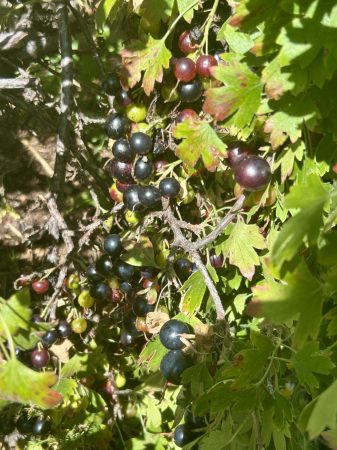
The Humble Blackcurrant
A Small Fruit With Serious Healing Power
There’s a bush in my garden that I keep pruned tight — just 4 feet tall and 4 feet wide — and yet last year it handed me over 5kg of fruit. That little blackcurrant bush punches so far above its weight that I have to talk about it. Between the harvest itself and the memories it stirs up every time I make a jug of juice, blackcurrants have earned a permanent spot in my garden and in my holistic health practice.
A Berry With a Backstory
Blackcurrants (Ribes nigrum) have been used in European folk medicine for centuries, long before anyone had a name for “antioxidants” or “vitamin C.” They were prized for supporting the immune system through cold and flu season, and traditional herbalists used the leaves as much as the fruit — steeped as a tea for joint discomfort and mild diuretic support.
Making my own blackcurrant juice takes me straight back to childhood, standing in the kitchen watching cordial get poured into a glass, always begging for “just a bit more.” I used to complain to my best friend Julie that she never made my drink strong enough. Funny how these things stay with you — now that I’m the one holding the bottle, I make it exactly as strong as I like. There’s something quietly satisfying about that.
Why Blackcurrants Deserve a Place in Your Diet
1. Exceptionally High in Vitamin C
Blackcurrants contain roughly four times the vitamin C of an equivalent amount of oranges. This makes them a genuine ally for immune resilience, collagen production (skin, joints, connective tissue), and iron absorption from plant foods.
2. Rich in Anthocyanins
The deep purple-black colour comes from anthocyanins, a class of polyphenol antioxidants. Research has linked these compounds to reduced oxidative stress, support for healthy blood vessels, and potential benefits for eye health and circulation.
3. Anti-Inflammatory Potential
Compounds in blackcurrants, including gamma-linolenic acid (GLA) found in the seed oil, have been studied for their role in modulating inflammation — of interest for joint comfort and skin conditions.
4. Gut and Metabolic Support
Blackcurrants are a good source of dietary fibre and contain polyphenols that may support a healthy gut microbiome, alongside a lower glycemic impact than many sweeter fruits.
5. Cognitive and Mood Support
Some preliminary research points to anthocyanin-rich berries like blackcurrant supporting mental clarity and mood, likely tied to their anti-inflammatory and antioxidant effects on the brain.
As always, this is general wellness information rather than medical advice — if you’re managing a health condition or taking medication, it’s worth checking with your healthcare provider before making significant dietary changes.
Growing Your Own: Small Space, Big Reward
You genuinely don’t need a large garden to grow blackcurrants. Mine is kept to about 4ft x 4ft with regular pruning, and it still produced over 5kg of fruit last season. A few tips if you want to try:
- Prune hard in late winter — blackcurrants fruit best on one- and two-year-old wood, so removing older stems each year keeps the bush productive and compact.
- Feed generously — they’re hungry plants; a good mulch of compost or well-rotted manure in spring goes a long way.
- Full sun to part shade — they’ll tolerate some shade, but more sun means more fruit.
- Harvest in strings — pick whole clusters (“strigs”) rather than individual berries; it’s faster and the fruit keeps a little better.
Healthy Blackcurrant Recipes
Simple Homemade Blackcurrant Cordial
No refined sugar needed — sweeten to your own taste, unlike the store-bought stuff!
Ingredients
- 500g fresh or frozen blackcurrants
- 500ml water
- 3–4 tbsp raw honey or maple syrup (adjust to taste)
- Juice of half a lemon
Method
Simmer the blackcurrants in water for 10–15 minutes until soft and the liquid is deeply coloured. Mash gently, strain through a fine sieve or muslin cloth, then stir the honey and lemon juice into the warm liquid until dissolved. Bottle and refrigerate. Dilute with still or sparkling water — as strong or as gentle as you like.
Blackcurrant and Chia Immune Jam
Ingredients
- 2 cups blackcurrants
- 3 tbsp chia seeds
- 2 tbsp honey
- 1 tbsp lemon juice
Method
Simmer the blackcurrants with a splash of water until they break down, remove from heat, then stir in the chia seeds, honey, and lemon juice. Let it sit for 15 minutes to thicken. Keeps in the fridge for about a week — lovely on porridge or yogurt.
Blackcurrant Herbal Tonic Tea
Ingredients
- 1 tbsp dried blackcurrant leaves (or 2 tbsp fresh, lightly bruised)
- 1 tsp dried blackcurrants
- 1 cup just-boiled water
- Optional: a slice of fresh ginger
Method
Steep covered for 8–10 minutes, strain, and sip. A gentle, antioxidant-rich tea that leans on the traditional folk use of the leaves alongside the fruit.
Blackcurrant Overnight Oats
Ingredients
- ½ cup rolled oats
- ½ cup milk of choice
- 2 tbsp plain yogurt
- ¼ cup fresh or frozen blackcurrants
- 1 tsp honey
Method
Combine everything in a jar, stir well, and refrigerate overnight. A fibre- and antioxidant-rich breakfast that takes two minutes to prepare.
If you’re growing your own blackcurrants this year, I’d love to hear how your harvest turns out — and if you make the cordial, don’t be shy about pouring it as strong as you want. Some childhood habits are worth breaking on purpose.