Signs, Causes, the Cancer Connection, and Natural Ways to Restore Balance
By Susan Cossi, IFPA-Accredited Clinical Aromatherapist and Holistic Health Practitioner, Holistic Teachings Inc.
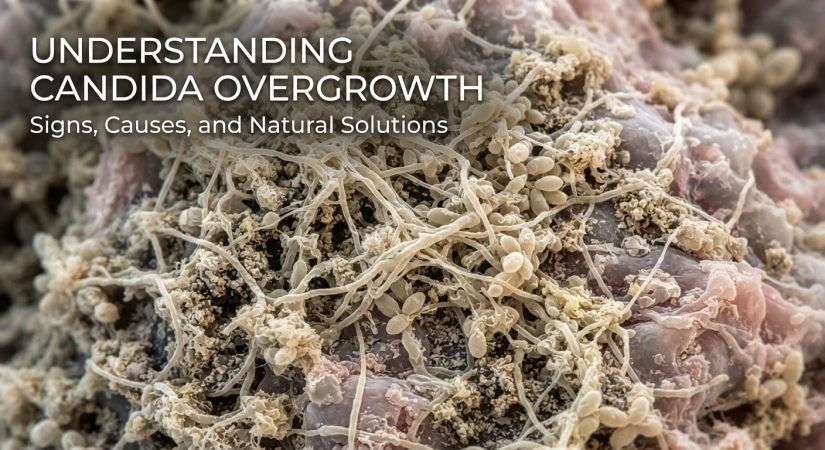
Most of us carry a little Candida albicans in our mouth, gut and on our skin. In a balanced body it is a harmless passenger, kept in check by beneficial bacteria and a strong immune system. When that balance tips, Candida can multiply and move from quiet resident to troublemaker. That is what we call Candida overgrowth.
In this post we will look at the signs, why overgrowth happens, what science is saying about Candida and cancer, and how food, herbs, essential oils, massage and reflexology can help you restore balance.
Signs You May Have a Candida Overgrowth
Candida symptoms are widespread and overlap with many other conditions. One symptom on its own means little. A pattern that persists is worth paying attention to.
| Body System | Common Signs |
| Mouth | White coating on the tongue, white patches inside the cheeks, cracked corners of the mouth, bad breath |
| Digestive | Bloating, gas, constipation or loose stools, acid reflux, strong sugar and bread cravings |
| Skin and nails | Athlete’s foot, nail fungus, rashes, jock itch, eczema-like patches, skin folds that stay red or itchy |
| Urinary and reproductive | Recurrent vaginal yeast infections, urinary tract irritation, itching |
| Energy and mood | Fatigue, brain fog, irritability, anxiety, poor concentration |
| Immune | Frequent colds, sinus congestion, seasonal allergies that seem to worsen |
Important: Symptoms like these can have many causes. Persistent or recurring symptoms deserve a proper assessment by your doctor or health care provider.
Why Does Candida Overgrow?
Candida takes over when the terrain of the body shifts in its favour. Common reasons include:
- A diet high in sugar, white flour and refined carbohydrates
- Antibiotic use, which wipes out beneficial bacteria that keep Candida in check
- Steroid medications, including inhaled steroids, and some hormonal medications
- Frequent alcohol intake
- Uncontrolled blood sugar or diabetes
- Chronic stress and poor sleep, which weaken immunity
- A weakened immune system from illness, chemotherapy or nutrient deficiency
- Dentures, poor oral hygiene or dry mouth
- Low stomach acid and sluggish digestion
- Damp, warm environments and tight, non-breathable clothing (for skin overgrowth)
Candida and Cancer: What You Should Know
This is a topic where it is important to be clear and honest, because there is a lot of fear and misinformation online.
What we can say:
- Candida albicans is one of the most common infections in people undergoing cancer treatment. Chemotherapy, radiation, steroids and weakened immunity make it easier for Candida to take hold, especially in the mouth and throat.
- Researchers are actively studying whether long-term Candida overgrowth may play a role in some cancers. The strongest link so far is with oral cancers, where chronic Candida infection of the mouth lining has been found alongside precancerous changes. Some studies are also looking at the esophagus, stomach and colon.
- Ways Candida may contribute to a cancer-friendly environment include chronic inflammation, damage to the lining of the mouth and gut, changes in the microbiome, and the production of certain irritating byproducts.
What we cannot say:
- Candida overgrowth has not been proven to cause cancer. The research is still emerging, and it is not yet clear whether Candida is a cause, a contributor, or simply more likely to show up when the body is already compromised.
- A Candida cleanse or anti-Candida diet is not a treatment for cancer, and no natural protocol as yet, should replace the care of your oncology team.
What this means for you:
- Take chronic or recurring Candida seriously rather than ignoring it. Addressing the root causes supports your whole body.
- Persistent white or red patches in the mouth, a sore that does not heal within two weeks, difficulty swallowing, or a lasting sore throat should be checked by your dentist or doctor. Do not assume it is “just thrush.”
- If you are being treated for cancer, always speak with your oncology team before starting any herbs, supplements, essential oils or cleanse. Some herbs can interact with treatment.
- Good oral hygiene, limiting alcohol, not smoking, and managing blood sugar all lower your risk of both Candida overgrowth and oral health problems.
Before You Cleanse: Prepare the Body First
When Candida dies off, it releases byproducts that the body has to clear. If your elimination pathways are sluggish, you can feel worse before you feel better, with headaches, fatigue, body aches, nausea, skin breakouts and flu-like symptoms. This is sometimes called a die-off reaction.
Spend one to two weeks preparing:
- Bowels: Aim for a complete bowel movement every day. Support with ground flax (Linum usitatissimum), chia (Salvia hispanica), vegetables and magnesium.
- Liver: Include bitter greens, dandelion (Taraxacum officinale), milk thistle (Silybum marianum) and lemon (Citrus limon).
- Hydration: Drink plenty of clean, filtered water and herbal teas.
- Sugar: Reduce sugar, alcohol and refined carbohydrates gradually, so cravings and withdrawal are easier.
- Sleep and stress: Prioritize rest, include an aromatherapy massage and calming practices, as stress feeds imbalance.
Choose a Cleanse That Suits You: Ask Your Practitioner
There is no one-size-fits-all Candida protocol. The right approach depends on your digestive strength, medications, medical history, whether you are pregnant or nursing, and whether you have a condition such as diabetes or a history of cancer. Going too hard and too fast can overwhelm the body.
If you choose to do a cleanse, please ask your holistic practitioner which one is best suited to you. A practitioner can match the herbs, dosage and length of time to your body, build in supportive care, and know when to refer you for testing or medical care.
What to Eat: Foods That Support Balance
| Food | Why It Helps |
| Non-starchy vegetables (broccoli Brassica oleracea, kale, spinach Spinacia oleracea, zucchini, cabbage) | Low in sugar, rich in fibre and nutrients |
| Garlic (Allium sativum) and onions (Allium cepa) | Traditional antimicrobial foods |
| Coconut oil (Cocos nucifera) | Contains caprylic and lauric acids, traditionally used in anti-Candida diets |
| Fermented foods (sauerkraut, kimchi, unsweetened kefir) | Support beneficial bacteria |
| Quality protein (eggs, wild fish, poultry, grass-fed meats) | Steady blood sugar and tissue repair |
| Healthy fats (olive oil Olea europaea, avocado Persea americana, nuts and seeds) | Keep you full and stabilize blood sugar |
| Low-sugar berries (blueberries Vaccinium corymbosum, raspberries Rubus idaeus) in small amounts | Antioxidants with less sugar than other fruit |
| Ginger (Zingiber officinale) and turmeric (Curcuma longa) | Soothe inflammation and digestion |
| Bitter greens (arugula Eruca vesicaria, dandelion greens) | Stimulate digestion and bile flow |
| Bone broth | Supports gut lining repair |
| Herbal teas (peppermint Mentha × piperita, chamomile Matricaria chamomilla, cinnamon Cinnamomum verum) | Soothing, sugar-free hydration |
Foods to Avoid or Limit
| Avoid | Reason |
| Sugar, honey, syrups, candy and sweetened drinks | Direct fuel for yeast |
| White flour, bread, pasta, pastries and crackers | Convert quickly to sugar |
| Alcohol, especially beer and wine | Sugar and yeast; burdens the liver |
| Fruit juice, dried fruit and very sweet fruits | Concentrated sugar |
| Processed and packaged foods | Hidden sugars and additives |
| Moldy or heavily aged foods (aged cheese, cured meats, leftovers kept for days) | May aggravate sensitive people; discuss with your practitioner |
| Sweeteners and “diet” foods | Can keep sugar cravings alive |
| Excess caffeine | Stresses adrenals and digestion |
Herbs with a Long History of Use
These herbs have been used traditionally for fungal balance and digestive health. Please use them with guidance, especially if you take medications or have any health condition.
| Herb | Latin Name | Notes |
| Oregano | Origanum vulgare | Rich in carvacrol; culinary and medicinal |
| Garlic | Allium sativum | Fresh is traditionally preferred |
| Thyme | Thymus vulgaris | Warming and antimicrobial tradition |
| Clove | Syzygium aromaticum | Used in small amounts |
| Cinnamon | Cinnamomum verum | Warming; helps with blood sugar balance |
| Pau d’arco | Tabebuia impetiginosa | Traditional South American herb |
| Oregon grape and barberry | Berberis aquifolium, Berberis vulgaris | Bitter, berberine-containing herbs |
| Olive leaf | Olea europaea | Traditional tea and extract |
| Neem | Azadirachta indica | Ayurvedic herb |
| Holy basil (tulsi) | Ocimum tenuiflorum | Calming adaptogen for stress |
| Dandelion | Taraxacum officinale | Liver and bowel support |
| Milk thistle | Silybum marianum | Liver support during a cleanse |
Probiotic support: Beneficial bacteria such as Lactobacillus and Bifidobacterium species, and the beneficial yeast Saccharomyces boulardii, are commonly used to help rebuild the gut after overgrowth.
Safety notes: Strong antifungal herbs are not suitable for everyone, including during pregnancy and breastfeeding, and some interact with medications. More is not better.
Essential Oils for Support
Essential oils are best used topically (well diluted) and by inhalation. Do not ingest essential oils.
| Essential Oil | Latin Name | How It Supports You |
| Tea tree | Melaleuca alternifolia | Traditionally used for skin and nail fungal concerns |
| Lavender | Lavandula angustifolia | Soothing for skin and calming for stress |
| Palmarosa | Cymbopogon martinii | Gentle and skin-friendly; used in antifungal blends |
| Geranium | Pelargonium graveolens | Balancing for skin; pleasant aroma |
| Thyme (linalool chemotype) | Thymus vulgaris ct. linalool | A gentler thyme for skin use |
| Lemon | Citrus limon | Uplifting and cleansing in diffusion |
| Peppermint | Mentha × piperita | Eases bloating and digestive discomfort in a belly massage |
Simple foot and nail blend: In 30 ml of carrier oil such as Sweet almond or jojoba (Simmondsia chinensis), add 6 drops tea tree, 4 drops lavender and 3 drops palmarosa. Apply to clean, dry feet or nails once or twice a day.
Cautions: Always dilute. Do a patch test first. Do not use essential oils inside the mouth to treat thrush. Oral thrush needs to be assessed by your dentist or doctor. Check with a clinical aromatherapist before use in pregnancy, with children, or with medical conditions.
Massage and Reflexology
Candida recovery is much easier when the body is moving waste out and the nervous system is calm.
Massage benefits:
- Gentle clockwise abdominal massage supports digestion and bowel movements
- Lymphatic drainage massage helps the body clear byproducts and reduces heaviness and puffiness
- Relaxation lowers stress, which supports immunity and balanced blood sugar
Reflexology points to focus on:
| Reflex Area | Location on the Foot |
| Digestive system (stomach, small and large intestine) | Central arch and heel area of both feet |
| Liver and gallbladder | Right foot, under the ball toward the outer edge |
| Adrenals | Centre of the foot just below the ball |
| Pancreas | Upper arch, mainly the left foot |
| Lymphatic points | Top of the foot between the toes |
| Immune and spleen | Left foot, under the ball toward the outer edge |
Work each area with slow, steady pressure and drink extra water afterward. Avoid deep abdominal work if you are pregnant or have an active abdominal infection, and check with your practitioner first if you have cancer or are in treatment.
A Sample Day of Eating
| Meal | Ideas |
| On waking | Warm water with fresh lemon |
| Breakfast | Two eggs with sauteed Kale, avocado and sauerkraut |
| Snack | A small handful of almonds (Prunus dulcis) or pumpkin seeds |
| Lunch | Large salad with greens, cucumber, olive oil and lemon, with wild salmon or grilled chicken |
| Snack | Celery and carrot sticks with guacamole |
| Dinner | Roasted vegetables with garlic and thyme, bone broth soup and a side of steamed broccoli |
| Evening | Peppermint or chamomile tea |
Daily Habits That Help Keep Candida in Balance
- Brush your teeth and tongue twice a day, and clean dentures every night
- Rinse your mouth after using inhaled steroids
- Change out of damp clothing quickly and wear breathable fabrics
- Take probiotics during and after any course of antibiotics, with your practitioner’s guidance
- Keep blood sugar steady with protein and fibre at every meal
- Limit alcohol and avoid smoking
- Get consistent, quality sleep
- Manage stress with walking, breathwork, time in nature and rest
Final Thoughts
Candida overgrowth is a message from your body that its balance has shifted. It is not something to fear, and it is not a cancer diagnosis. It is also not something to brush aside when it keeps coming back. Look for the root causes: sugar, medications, stress, weak digestion and poor sleep. Support the gut, the liver and the immune system, and bring in a practitioner to guide any cleanse so it is safe and fits you.
If something in your mouth or throat does not look or feel right, or does not clear up, please have it checked by a dentist or doctor.
If you would like help building a plan, book a consultation and we will create a gentle, personalized approach for your body and your life.
This article is for educational purposes and is not a substitute for medical advice, diagnosis or treatment. Always consult a qualified health care provider before starting any herbal or cleansing protocol, especially if you are pregnant, nursing, taking medications, or have been diagnosed with or are being treated for cancer or any other medical condition.