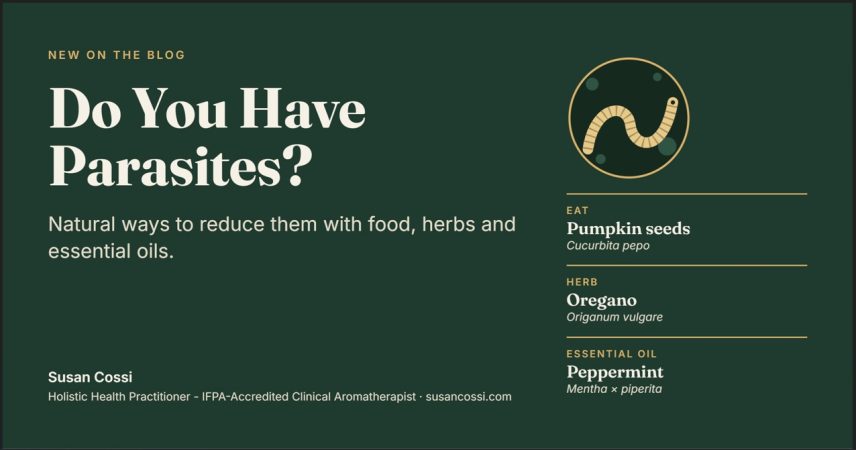
Natural Ways to Reduce Them with Food, Herbs and Aromatherapy
By Susan Cossi, IFPA-Accredited Clinical Aromatherapist and Holistic Health Practitioner, Holistic Teachings Inc.
It is not a pleasant topic, but it is a common one. Parasites, from microscopic protozoa to intestinal worms, are far more widespread than most people realize, and you do not have to travel to a faraway country to pick them up. Contaminated water, undercooked foods, pets, produce, and a gut that is run down can all open the door. The good news is that a healthy, well-supported body is a much harder place for them to set up house.
In this post we will look at the signs of overgrowth, why it happens, what to eat and avoid, which herbs and essential oils have a long tradition of use, and how massage and reflexology can support the process.
Signs You May Have a Parasite Overgrowth
Symptoms are often vague and overlap with many other conditions, which is why parasites are so easily missed. One sign on its own means very little. A cluster of them over a longer period is worth paying attention to.
| Body System | Common Signs |
| Digestive | Bloating, gas, loose stools, constipation or alternating both, cramping, nausea, undigested food in stools |
| Energy and mood | Ongoing fatigue, brain fog, irritability, anxiety, poor sleep or waking between 2 and 4 am |
| Skin | Unexplained rashes, hives, eczema flares, itchy skin, dull complexion |
| Nutrition | Constant hunger, strong sugar or carbohydrate cravings, unexplained weight loss or gain, nutrient deficiencies |
| Other | Itching around the anus (especially at night), teeth grinding, joint and muscle aches, frequent colds |
Important: If you have blood in your stool, persistent diarrhea, fever, unexplained weight loss, or severe pain, see your medical doctor promptly. A stool test is the only reliable way to confirm which organism, if any, you are dealing with.
Why Do Parasites Take Hold?
Most people who carry parasites do not have an “infection” so much as a terrain that allows them to thrive. Common reasons include:
- Low stomach acid and weak digestion, so organisms are not destroyed on the way down
- A diet high in sugar and refined carbohydrates, which feeds unwanted organisms
- Antibiotic use that has depleted beneficial gut bacteria
- Chronic stress, which suppresses immune and digestive function
- Contaminated water, including lakes, streams and travel destinations
- Raw or undercooked meat, fish and unwashed produce
- Close contact with pets and farm animals, and poor hand hygiene
- Sluggish bowels and a congested liver, so waste is not leaving the body well
- A weakened immune system from illness, poor sleep or nutrient deficiency
Before You Cleanse: Prepare the Body First
This step is the one most people skip, and it is the reason many cleanses leave people feeling worse. When parasites are disrupted, they release waste and toxins. If your body cannot eliminate efficiently, those toxins recirculate and you may experience headaches, fatigue, skin breakouts, nausea and a flare of symptoms.
In short, yes, you need to “clean” before you cleanse. Spend one to two weeks preparing:
- Bowels: Aim for at least one complete bowel movement daily. Support with ground flax (Linum usitatissimum), psyllium husk (Plantago ovata), magnesium and plenty of vegetables.
- Liver: Include bitter foods and herbs such as dandelion root and leaf (Taraxacum officinale), milk thistle (Silybum marianum), artichoke (Cynara scolymus), beets (Beta vulgaris) and lemon (Citrus limon).
- Kidneys and hydration: Drink plenty of clean, filtered water and herbal teas.
- Skin and lymph: Dry brushing, gentle movement, walking and sweating.
- Diet: Reduce sugar, alcohol, caffeine and processed foods so you are not feeding the problem.
Choose a Cleanse That Suits You: Ask Your Practitioner
There is no one-size-fits-all parasite cleanse. The right approach depends on your age, digestive strength, medications, health history, whether you are pregnant or nursing, and what you are actually dealing with. Some powerful herbs are not suitable for everyone. Black walnut hull and wormwood, for example, can be harsh, and certain herbs interact with medications or are unsafe during pregnancy.
If you choose to do a cleanse, please ask your holistic practitioner which one is best suited to you. A practitioner can tailor the herbs, the dose, the length of time and the supportive care, and can tell you when to stop or when to seek medical testing.
What to Eat: Foods That Make the Body Less Welcoming
| Food | Why It Is Traditionally Used |
| Pumpkin seeds (Cucurbita pepo) | Long used in folk medicine as a gentle, food-based support |
| Papaya and papaya seeds (Carica papaya) | Contains the enzyme papain; traditionally used for digestive support |
| Pineapple (Ananas comosus) | Source of bromelain, a digestive enzyme |
| Pomegranate (Punica granatum) | Traditional use as a gut-supportive fruit |
| Raw garlic (Allium sativum) | Pungent sulfur compounds; a classic kitchen remedy |
| Onions (Allium cepa) | Supports healthy gut flora and digestion |
| Carrots (Daucus carota) | Fibre helps move waste through |
| Coconut oil (Cocos nucifera) | Medium-chain fatty acids such as caprylic acid; traditionally used in gut protocols |
| Fermented foods (sauerkraut, kimchi, kefir) | Rebuild beneficial gut bacteria |
| Bitter greens (arugula Eruca vesicaria, dandelion Taraxacum officinale) | Stimulate stomach acid, bile and digestion |
| Ginger (Zingiber officinale) and turmeric (Curcuma longa) | Warming, digestive and anti-inflammatory |
| High-fibre foods (flax, chia Salvia hispanica, leafy greens, vegetables) | Keep bowels moving so waste leaves the body |
| Bone broth and quality protein | Supports gut lining repair and immune function |
Foods to Avoid or Limit
| Avoid | Reason |
| Sugar, candy, baked goods, sweet drinks | Feeds unwanted organisms and weakens immunity |
| White flour and refined carbohydrates | Break down quickly into sugars |
| Alcohol | Burdens the liver and irritates the gut |
| Processed and packaged foods | Low in nutrients, high in additives |
| Raw or undercooked pork, beef, fish and shellfish | Common source of parasites |
| Unwashed produce and untreated water | Common source of contamination |
| Excess dairy (if you are sensitive) | Can increase mucus and gut irritation |
| Excess fruit juice and dried fruit | Concentrated sugar |
| Caffeine in excess | Stresses digestion and adrenals |
Herbs with a Long History of Use
Herbalists have used these plants for generations in traditional digestive and cleansing protocols. They are best used under the guidance of a qualified practitioner, especially the stronger ones.
| Herb | Latin Name | Notes |
| Black walnut hull | Juglans nigra | Traditional cleansing herb; strong, not for everyone |
| Wormwood | Artemisia absinthium | Very bitter; short-term use only under guidance |
| Sweet wormwood | Artemisia annua | Traditional herb used in several cultures |
| Cloves | Syzygium aromaticum | Often paired with other herbs in traditional formulas |
| Oregano | Origanum vulgare | Culinary and medicinal; rich in carvacrol |
| Thyme | Thymus vulgaris | Warming, antimicrobial tradition |
| Garlic | Allium sativum | Kitchen staple with a long tradition |
| Barberry and Oregon grape | Berberis vulgaris, Berberis aquifolium | Bitter, berberine-containing herbs |
| Goldenseal | Hydrastis canadensis | Over-harvested; use only sustainably sourced and with guidance |
| Neem | Azadirachta indica | Ayurvedic digestive herb |
| Pau d’arco | Tabebuia impetiginosa | Traditional South American herb |
| Fennel seed | Foeniculum vulgare | Soothes gas and cramping |
| Peppermint | Mentha × piperita | Calms the digestive tract |
| Dandelion | Taraxacum officinale | Liver and bowel support |
| Milk thistle | Silybum marianum | Liver support during a cleanse |
Safety notes: Many of these herbs are not suitable during pregnancy or breastfeeding, for children, or alongside certain medications. Do not take strong cleansing herbs for long periods. More is not better.
Essential Oils for Digestive and Cleansing Support
Aromatherapy can be a gentle, supportive part of your plan, mainly through topical use and inhalation. Essential oils are extremely concentrated, so please do not ingest them unless you are working with a qualified clinical aromatherapist.
| Essential Oil | Latin Name | How It Supports You |
| Peppermint | Mentha × piperita | Eases cramping, bloating and nausea |
| Sweet fennel | Foeniculum vulgare | Digestive comfort, gas and bloating |
| Ginger | Zingiber officinale | Warming, settles nausea |
| Lemon | Citrus limon | Uplifting and cleansing; supports liver and lymph |
| Roman chamomile | Chamaemelum nobile | Calming for stress-related digestive upset |
| Lavender | Lavandula angustifolia | Relaxing, helps sleep and eases abdominal tension |
| Clove bud | Syzygium aromaticum | Warming; use in very low dilution only |
| Oregano | Origanum vulgare | Very strong; skin irritant, requires careful dilution |
| Tea tree | Melaleuca alternifolia | Cleansing; used in topical and household cleaning blends |
Simple abdominal blend: In 30 ml of carrier oil such as sweet almond (Prunus dulcis) or Sunflower (Helianthus annuus), add 3 drops peppermint, 4 drops sweet fennel and 5 drops lavender. Massage gently over the belly in a clockwise direction, the way the colon moves, once or twice daily.
Cautions: Always dilute. Avoid peppermint on the face of young children. Check with a clinical aromatherapist before using essential oils in pregnancy, with children, with epilepsy, or with medications. Never apply oregano or clove undiluted.
Massage and Reflexology
A parasite cleanse works best when the body is moving waste out. Hands-on therapies can help with that.
Massage benefits:
- Abdominal massage encourages peristalsis and regular bowel movements
- Lymphatic drainage massage supports the removal of waste and reduces puffiness and heaviness
- Relaxation lowers stress, which improves digestion and immune function
- Castor oil (Ricinus communis) packs over the abdomen are a traditional way to warm and support the liver and bowels
Reflexology points to focus on (feet):
| Reflex Area | Location on the Foot |
| Small intestine | Central arch area of both feet |
| Large intestine (colon) | Across the heel edge and arch; right foot ascending, left foot descending |
| Ileocecal valve | Right foot, at the junction near the heel edge |
| Liver and gallbladder | Right foot, under the ball of the foot toward the outer edge |
| Stomach and pancreas | Upper arch, mainly left foot |
| Adrenals and kidneys | Centre of the foot, just below the ball |
| Lymphatic points | Top of the foot between the toes |
Work each area with slow, steady pressure for a few minutes. If you are in the middle of a cleanse, drink extra water afterward. Avoid deep abdominal massage if you are pregnant, have an active abdominal infection, or have a diagnosed bowel condition, unless cleared by your health care provider.
A Sample Day of Eating
| Meal | Ideas |
| On waking | Warm water with fresh lemon (Citrus limon) |
| Breakfast | Eggs with sautéed greens and a spoonful of sauerkraut, or a smoothie with pineapple, ginger and chia |
| Snack | A small handful of raw pumpkin seeds |
| Lunch | Large salad with bitter greens, grated carrot, beets, olive oil (Olea europaea) and lemon, with grilled chicken or wild fish |
| Snack | Sliced fennel or cucumber with hummus |
| Dinner | Vegetable soup or stew with garlic, onion, thyme and bone broth, with a side of steamed greens |
| Evening | Peppermint, fennel or chamomile tea |
Daily Habits That Help Prevent Reinfection
- Wash your hands thoroughly before eating and after using the bathroom, gardening or handling pets
- Wash and, where appropriate, peel produce
- Cook meat and fish thoroughly
- Drink filtered or treated water, especially when camping, hiking or travelling
- Deworm pets regularly with your vet and keep their areas clean
- Change bed linens and towels often if you suspect pinworms
- Support your gut with probiotics, fermented foods and good sleep
- Manage stress; a calm nervous system supports a strong digestive system
Final Thoughts
Parasite overgrowth is not something to be embarrassed about. It is a sign that your body’s terrain needs some care. Start with the foundations: clean food, clean water, daily elimination, a supported liver and a calm nervous system. Add herbs and aromatherapy thoughtfully, and bring in a practitioner to guide you through any cleanse so it is safe, effective and tailored to you.
If you would like help deciding where to begin, book a consultation and we will build a plan that fits your body and your life.
This article is for educational purposes and is not a substitute for medical advice, diagnosis or treatment. Always consult a qualified health care provider before starting any herbal or cleansing protocol, especially if you are pregnant, nursing, taking medications or managing a medical condition.