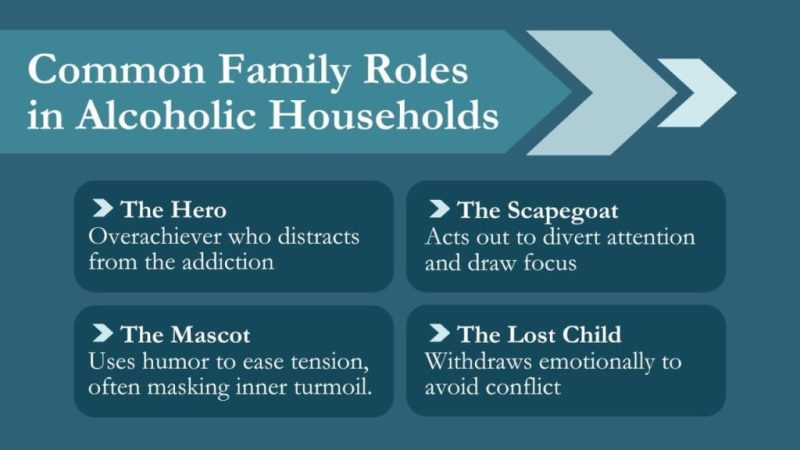
Your story captures a common misconception perfectly—that alcoholism only “counts” when someone is completely non-functioning. But for those who grew up in homes where alcohol shaped the emotional landscape, the impact runs much deeper than whether a parent could hold down a job or maintain appearances.
Why These Traits Matter
Understanding the characteristics of adult children of alcoholics (ACOAs) is crucial for several reasons:
Recognition leads to healing. Many ACOAs spend years wondering why they struggle with certain patterns—perfectionism, difficulty trusting others, or an overwhelming need to control situations. Recognizing these traits as adaptive survival mechanisms rather than personal failings can be transformative.
Breaking the cycle. Without awareness, these learned behaviors often get passed down through generations, even when alcohol isn’t part of the equation. The coping strategies that helped you survive childhood can become obstacles in adult relationships and parenting.
Self-compassion over self-criticism. When you understand that your hyper-vigilance or people-pleasing tendencies developed as reasonable responses to an unpredictable environment, you can approach yourself with compassion rather than judgment.
Connection with others. Realizing you’re not alone in these experiences—that millions of others share similar traits—can be profoundly validating and reduce the shame many ACOAs carry.
The 15 Core Traits
1. Fear of Loss of Control Growing up in an environment where things felt unpredictable, ACOAs often develop an intense need to control their surroundings, relationships, and even themselves. The idea of “letting go” can feel genuinely dangerous.
2. Fear of Emotions and Emotional Expression When emotions in childhood were either explosive or dismissed, you learn to suppress your own feelings. Many ACOAs report feeling “numb” or having difficulty identifying what they actually feel.
3. Difficulty with Intimate Relationships Trust is hard-won when your earliest relationship taught you that people can be unpredictable or unavailable. ACOAs often struggle with either avoiding intimacy entirely or clinging too tightly.
4. Overdeveloped Sense of Responsibility Many ACOAs became “parentified children,” taking on adult responsibilities far too young. This can translate into an adult who feels responsible for everything and everyone, unable to set healthy boundaries.
5. Excessive Need for Approval When parental approval was conditional or unpredictable, you learn to constantly scan for signs of approval or disapproval in others, often sacrificing your own needs to gain acceptance.
6. Difficulty Having Fun Spontaneity and play may have felt unsafe in childhood. Many ACOAs report feeling guilty when relaxing or having trouble “letting loose” even in appropriate contexts—like your stepdad at that 11 a.m. bar visit, perhaps unable to see the irony.
7. Extreme Self-Criticism ACOAs often internalize the chaos of their childhood as personal failure. The harsh inner critic becomes relentless, never satisfied, always finding fault.
8. Living in Extremes (All or Nothing Thinking) Gray areas feel uncomfortable when you grew up with unpredictability. Things are either perfect or terrible, safe or dangerous, with little room for nuance.
9. Difficulty Following Projects Through The combination of perfectionism and fear of failure can lead to starting projects with enthusiasm but abandoning them when they become difficult or imperfect.
10. Compulsive Lying (Even When Truth Would Be Easier) In homes where truth-telling could have unpredictable consequences, some ACOAs develop a habit of lying to avoid conflict, even when honesty would be simpler and safer.
11. Judging Themselves Without Mercy Related to extreme self-criticism, this trait involves holding yourself to standards you’d never apply to others, creating an exhausting internal environment.
12. Taking Themselves Very Seriously Many ACOAs had to grow up too fast and carry adult burdens as children. This can manifest as difficulty with lightness, playfulness, or seeing the humor in situations.
13. Difficulty with Change Even positive change can trigger anxiety because change means unpredictability, and unpredictability meant danger in childhood.
14. Constantly Seeking Affirmation Despite appearing confident, many ACOAs have a core belief that they’re not enough, leading to an insatiable need for external validation.
15. Feeling “Different” from Others ACOAs often report a persistent sense of being on the outside looking in, feeling fundamentally different from people who seem to navigate life with ease.
The Bar at 11 a.m.: A Story About Seeing What’s Always Been There
I was sitting at a bar with my stepdad on a Saturday morning—around 11 a.m.—when I struck up a conversation with the guy on the stool next to me. We were talking about something, I don’t even remember what, when I casually mentioned, “Well, I’m a child of an alcoholic.”
The words just came out. Natural. Matter-of-fact.
My stepdad’s head whipped around. “Who?” he asked, his voice a mix of confusion and something that looked like horror.
I couldn’t help but giggle. “Dad,” I said, gesturing around us, “we’re sitting at a bar at 11 o’clock on a Saturday morning.”
The irony hung in the air between us.
My stepdad was a hardworking Irish man. The kind who never missed a day of work, who provided for his family, who showed up when he said he would. In his mind, an alcoholic was someone who couldn’t function, someone who lost everything, someone whose life fell apart. That wasn’t him. That couldn’t be him.
And he was right, in a way. It wasn’t that simple.
The Myth We All Believe
For so long, I think we all bought into the same narrow definition of what alcoholism looks like. We picture the stereotype: someone who can’t hold down a job, who disappears for days, whose life is visibly unraveling. But what about the parent who works hard, pays the bills, and shows up reliably—yet alcohol still shapes everything? The mood at dinner. Whether it’s safe to ask a question. How predictable or unpredictable the evening will be.
It’s not about drinking at 11 a.m. on a Saturday. It’s about whether alcohol takes priority over emotional connection. Whether it creates distance where there should be closeness. Whether it introduces unpredictability into what should feel safe.
My stepdad maintained his employment, But I still grew up walking on eggshells sometimes, reading the room before I entered it, managing moods that weren’t mine to manage. I learned to adapt myself to accommodate the unpredictability that alcohol brought into our family system, even when everything else looked functional.
What I Understand Now
Looking back on that moment at the bar, I realize my stepdad’s shocked reaction revealed something important: sometimes the people closest to the situation have the hardest time seeing it clearly. And maybe that’s okay. Maybe that’s part of the journey too.
I’m not sharing this story to blame my stepdad or to paint him as a villain. He’s not. Most people struggling with alcohol are dealing with their own generational trauma, their own untreated pain, their own childhood wounds that they never got the chance to heal. Understanding this isn’t about dwelling in victimhood or pointing fingers backward.
It’s about giving myself permission to heal. To make different choices. To rewrite the internal scripts that no longer serve me.
It’s about recognizing that you can love someone deeply and still acknowledge that growing up in their home left marks. You can honor their hard work and consistency while also validating your own experience of what it felt like to be a child in that environment.
Moving Forward
If you’re reading this and seeing yourself in my story, I want you to know: your experience matters, even if it doesn’t match the stereotype. Even if the parent in question was hardworking and present. Even if things looked fine from the outside.
I’ve found help through my metaphysical journey but you could try therapy—specifically with someone trained in family systems and trauma-informed care. Support groups like Adult Children of Alcoholics (ACA) can give you community and validation when you need it most. You are not alone.
That casual comment I made to a stranger at the bar, the one that made my stepdad’s face change—it wasn’t meant to hurt him. But my awareness, even delivered with a giggle, was the first step toward understanding my own story. Toward claiming it. Toward healing it.
Sometimes the truth lives in the small moments. In the jokes we make that aren’t quite jokes. In the things we say casually that land with weight.
We were sitting at a bar at 11 a.m. on a Saturday morning.
And I am a child of an alcoholic.
Both things can be true.